Identify Your Paistes
Contents
- 1 Alloys
- 2 B20 Alloy
- 3 B15 (Signature) Alloy
- 4 B8 (2002) Alloy
- 5 Brass MS63
- 6 Nickel Silver NS12
- 7 Serial Numbers
- 8 Series Logos/stamps/emboss
- 9 Ink Stamps
- 10 Series Stamps/emboss
- 11 Prototypes
- 12 Size Stamps
- 13 Artist Model Stamps
- 14 Lathing
- 15 Hammering
- 16 Factory refinishing
- 17 European, English & Japanese distributors
- 18 U.S. distributors before 1965
It is not uncommon for people to come across Paistes that are not completely identifiable. This includes vintage cymbals which the ink stamped logos and labels have been removed or faded.
More modern cymbals can be rendered ambiguous if cleaned improperly.
This page includes points used to identify cymbals that do not have proper labeling that has survived (more info is also available on the serial # page).
Please note that for this conversation, the term "embossed" refers to anything pressed into the metal of the cymbal, and the word "stamped" refers to any wording applied in ink.
In other arenas these terms may not be used in the same way.
Alloys
There are several alloys used in the production of Paistes: The easiest way to determine the alloy of an unknown cymbal is visually. However, the color may be difficult to judge in digital photographs. It is recommended that when trying to identify a cymbal that it be done in person. Comparing to a cymbal of a known alloy is helpful if one is not familiar with the hues of the different alloys. The formulae noted below refers to the amount of tin is mixed in with the main metal ingredient, copper. So the B8 formula would be 8% tin to 92% copper, for example. The Brass and Nickel-Silver alloys differ slightly from this formula scheme (see below).
B20 Alloy
B20 (20% tin/80% copper) tends to have a silver or white color hue. It is more pale than either the B15 and B8 alloys. The copper in the alloy will oxidize when exposed to excessive moisture.
Series that use this alloy: SUPER FORMULA 602, Formula 602, Sound Creation, Twenty, Twenty Custom Collection, and Twenty Masters Collection.
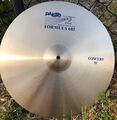
Formula 602
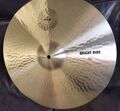
Sound creation
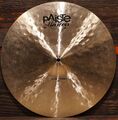
Twenty Masters

Twenty Custom


B15 (Signature) Alloy
Our "Sound Alloy" (15% tin/85% copper) is the first bronze formula ever developed specifically for making cymbal sounds.
When we achieved break-through in the development process in 1988, it became apparent that the sound potency in our new bronze surpassed our wildest expectations. To date, we have created Paiste Line "Signature", Sound Formula, and the new Paiste Line "Traditional" collection, convincingly substantiating the incredible sound range of our patented "Sound Alloy". (1)
B15, or Proprietary Signature Bronze (PSB) alloy, can be identified by lustrous yellow coloration. Like all bronze, a blue/green oxide will be found when exposed to excessive moisture. This cupric oxide is what gives the Statue of Liberty its characteristic color.
In early promotional materials, Paiste referred to this alloy as "PSA" - Paiste Sound Alloy.
Series that use this alloy: Signature, Signature Dark Energy, Signature Traditionals, and Visions(certain models), Sound formula.
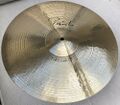
Signature
- Paiste Signature Dark Energy 17 Dark Crash.jpg
Signature Dark Energy
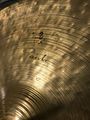
Signature Traditionals
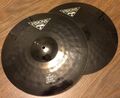
Visions
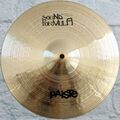
Sound formula


B8 (2002) Alloy
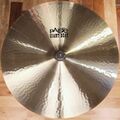
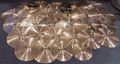
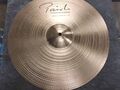
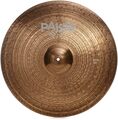
B8 bronze (8% tin/92% copper)has a noticeable orange hue to it. This is readily seen in clean cymbals, but is also present in cymbals that have developed a patina. One noticeable exception is the RUDE line: RUDEs are B8 cymbals but have a characteristic unlathed appearance. The color of a RUDE may have a tint (green or brown usually) but the lack of lathing and the raw color from the annealing process give them away.
Moisture will cause B8 to develop a tell tale blue/green oxide.
Series that use this alloy: 2002, Giant Beat, RUDE, Dimensions, Innovations, Alpha, 505, 404, Stambul 65, Stambul B8 (after mid/late 60's), Dixie (after 'mid/late 60's), 3000, 2000, 1000 among others.
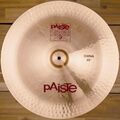
2002
Giant Beat

Rude
Dimensions
Innovations
900 series
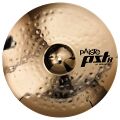
PST 8
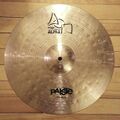
Alpha
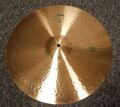
505
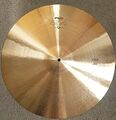
404


Brass MS63
Brass is a copper/zinc alloy, most commonly in a 63% copper / 37% zinc ratio, used in some entry level Paiste cymbals. Christian Wenzel of Paiste notes that, “Brass sounds slightly muffled in comparison to all bronze alloys.”
Paul Francis at Zildjian describes brass cymbals as being “limited” in sound and durability and “the most basic cymbals you can hit.” Judging by these limitations, it probably comes as no surprise that brass is used much less commonly than bronze. This alloy is almost exclusively found in beginner lines of instruments.
If your store carries entry-level kits that come with complimentary cymbals, they’re likely to be brass.
Series that use this alloy: Brass-Tones, 101 Brass, 200, 302
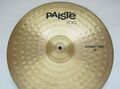
200
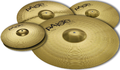
101
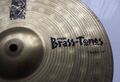
Brass tones
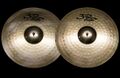
302


Nickel Silver NS12
Composing roughly of 65% copper / 15% nickel: Cymbals made of nickel silver have a steely silver color. This color tends to be more sterile looking then B20 alloy, resembling steel in many cases. Nickel silver is known for not corroding easily and may only have a light surface patina, rendering them more of a grey color. If exposed to moisture, they will not develop the blue/green oxide indicative of cupric alloys.
Series that use this alloy: Stambul (pre '71), Dixie (pre '71), Ludwig, Stanople, and Super, among others.
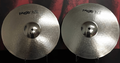
402 nickel silver "NS12" hi-hats

Stambul "NS12" 20" ride
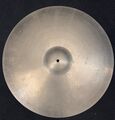
Ludwig standard "NS12" 22" ride
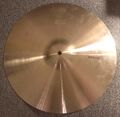
Super medium
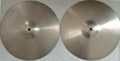
14" Stanople marching


Serial Numbers
Please see the special "serial number page" that examines these in detail.
Prototypes may or may not adhere to the serial number patterns in all respects.
Series Logos/stamps/emboss
The other important embossed information is the series stamp. Early Paistes used this method exclusively for identification of the cymbal. The typical embossed logos can be see on the various series pages.
In many cases this was later replaced with ink stamped logos. Embossed logos are usually found at the 12:00 position on the cymbal.
Spotting details include:
Very early 2002 cymbals used a logo with a border that is not seen in later examples. It is thought that this indicates cymbals from 1971. Examples have not included serial numbers indicating that they were from 1971 or 1972.
Early Traditional models had an embossed or etched Paiste script logo. This was discontinued after the first or second year. Cracking about the embossed logo has been sighted as a reason for this change.
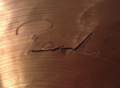
Traditional series Emboss Logo Crack
- 2002 early logo.jpg
Early 2002 stamp with "border"

German 2002 ink logo
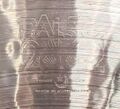
2002 emboss/stamp

'81 602 transition from emboss logo/black to blue label
- German 505 logo.jpg
German 505 green label ink logo

German 404 brown ink label
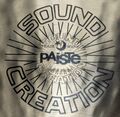
'81 Sound creation transition from emboss to black ink label

Rude 1st. generation ink stamp
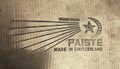
Vintage Giant beat emboss logo

Stambul 65
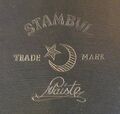
Stambul

Dixie

Zilko

Super
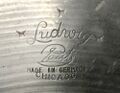
Ludwig-Paiste

Ludwig "standard"
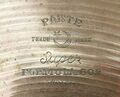
Super formula 602

Ludwig-Stanople

Standard


Ink Stamps
Paiste started to use ink stamps to identify their products a few decades ago. These are used to identify the series, type and size of the cymbals. There are several extra ink stamps found on some cymbals, including identification of the Seven Sound Set number, and more recently special artwork to highlight artist models: detailed info here.
Series Stamps/emboss
Found in the 12:00 position these serve the same purpose as the embossed logos. They have come to replace embossed logos. But there was a transitional period where both inked and embossed logos both appeared on cymbals.
This is generally the "black label" period as seen in the Formula 602 and 2002 series. The "black label" era refers to early ink stamps where only black was used in the series logo: detailed info here.
Prototypes
Prototypes tend to be a bit non standard in their labeling. It is common practice for the 12:00 position to contain the word "Paiste" in large print. In smaller print, the word "Prototype" normally appears in a smaller size just below this. Examples exist the do not include the word "Prototype". These stamps have only been observed in black on non-colorsound treated cymbals, and white for colored cymbals.
Spotting details include: Prototypes do not contain any production series identifiers, except for a small sticker often found on the back of the cymbal. It is unclear whether this is an indication of what series the cymbals was designed for or if it is only used as a guide for pricing the cymbal by retailers. Prototypes often use "generic" model designations, i.e., "Crash", "Ride", "Hi-Hat", et cetera.


Size Stamps
During the "black label" era, size stamps appeared under the bell. They later were moved to the front of the cymbal and placed below the type identifier in the 03:00 position.
Like the type label, they are usually in a sans serif font. When using the sans serif font, the number is in a bold typeface.
There has been subtle variation in the font over the years, such as the inch symbol being in either a bold or non-bold font: detailed info here
Spotting details include:
- RUDES uses a stencil font for the type label, but the standard sans serif font for the size.
- In the 1990s the size has become part of the type label for the Traditional and Signature series
- Like the type label, the size label of prototype have been found in the 03:00 position and 12:00 position.
- Giant Beats lack the size on both the original, and re-issues.
Artist Model Stamps
There have been a limited number of artists model stamps ranging from simple sans serif text to graphics.
Spotting details include:
- The Formula 602 Joe Morello cymbals included his name stamped in the 03:00 position with the type identification.
- The phrase "Seven Sound Set" and the corresponding type number is stamped in the 03:00 position in red ink.
- The Sheila E. Sex Cymbal is unusual in that the stylized artists name is stamped in the 12:00 and the term "Sex Cymbal" appears in the 06:00 position.
- The RUDE 24" Mega Power Ride (John Dolmayan) includes the "Eclipse" moniker in the 03:00 position just above the type label.
- The initial release of the Black Alphas use a unique gold tones ink and include the Slipknot logo in the 09:00 position.
- The Signature 22" Blue Bell Ride (Stewart Copeland) features white "The Rhythmatist" logo in the 06:00 position under the cymbal type label.
- The Signature 22" Reflector Bell Ride (Nicko McBrain) has "Powerslave" written in Iron Maiden font together with Eddie stencil in 06:00 position under the cymbal type label.
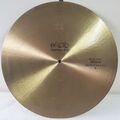
Seven Sound Set #4
Seven Sound Set #3

Joe Morello

Joe Morello


Lathing
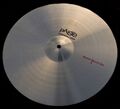
In the absence of embossed or stamped logos, cymbal identification can be performed by evaluating the lathing. Many series have very distinct lathing.
For example, RUDES are known for not being lathed at all (with the exception of the 24" Mega Power Ride, and Innovations have the "Sound Texture" lathing that looks as if the lathing tool was allowed to skip across the surface.
Spotting details include:
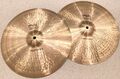
2002's have two layers of lathing: fine lathing with uneven spaced coarse lathing over it

602 crashes, rides etc. seem to have very consistent even spaced deep lathing
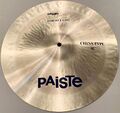
602 chinas, splashes, bells and flat rides have very fine lathing
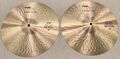
hi-hats vary depending on weight: heavies have coarse lathing
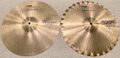
Medium and sound edge hi-hats have fine lathing
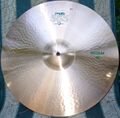
505's are similar to 2002's with dual lathing except the coarse lathing is simpler and evenly spaced
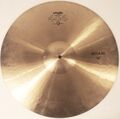
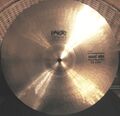
404's have very consistent tightly packed moderate lathing, not as deep as the lathing on 602's


Hammering
In addition to the lathing, the hammering of a cymbal can be critical to identifying a cymbal when no embossed or stamped logos are found. And just as with lathing, various series have characteristic hammering.
In some cases, such as the 2002 Wilds, the sub-series has a distinct heavy hammering.
Spotting details include:
Coming soon.
Factory refinishing
Details are scarce, but from a few 2007 online posts from a German drum forum, it seems Paiste offered a "refinishing service" where they would clean, recoat and then print new logos using modern methods (no rubber ink stamp!).
Results are outstanding considering the reasonable cost associated for the service (see correspondence below), both the the German factory and Swiss factory offered this service.
According to correspondence; if you want new logos printed, only the Swiss factory can do it. Also, we don't know if Paiste is still offering this service.
If you find a 70's black label cymbal based on the serial number but it looks brand new, this could be the reason why.
03/2007:
"Thank you for your email and your interest in Paiste products.
Please note that we are offering this service free of charge until further notice. Please send the cymbals directly to us in Switzerland.
Thank you for your understanding and your continued support!
Best regards, Paiste AG
Customer Service: Switzerland"
10/2007:
"Thank you very much for your email. The Paiste company calculates the refinishing as follows:
Cleaning and preservation 20, - Euro net / pc.
Cleaning, stamping and preservation 30, - Euro net / pc.
Shipping costs are calculated at 3.80 euros net.
In your case, I need to know what color the 2002 logo is and whether it needs to be renewed.
If this is the case, we will send the cymbals to Switzerland because we do not have the appropriate logos here in Germany, then you would have to accept a longer waiting time.
Please send the cymbals to the following address:Paiste GmbH & Co.KG, Gorch-Fock-Str. 13
D-24790 Schacht-Audorf"

15" sound edge top before
15" sound edge top after
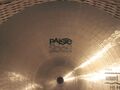
Closeup

15" sound edge bottom before

15" sound edge bottom after
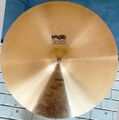
German 2002 from about 1976 based on serial number
- Refurbed 2002 3.jpg
Closeup
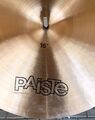
bottom logo shows the post 2005 "made in Switzerland"


European, English & Japanese distributors
Collectors may run across odd looking logos from vintage Paistes during their online searches, below is some background detail and history on what one might find:
Arbiter: England
"Arbiter Ltd." and "Dallas–Arbiter" were the UK importers and distributors for Paiste. Ivor Arbiter wikipedia
Ivor Arbiter was a British-American drum designer, manufacturer, instrument salesman, and entrepreneur. In his early career, he was the owner and operator of a specialty drum shop in the West End of London.
Later, Arbiter founded or co-founded several instrument companies, including Arbiter–Western, Dallas–Arbiter and CBS–Arbiter. "Arbiter Ltd." was sold to Dallas in 1969 the company was renamed "Dallas–Arbiter".
Looks like Arbiter started carrying Paiste (with alternate embossing and series names: Arbiter Custom 602, Custom, Zilko, Zilket) in 1962.
These were sold until at least 1966 and maybe as late as 1968. By 1969, Arbiter started carrying standard Paiste branded product lines except for the Zilkets which were sold until the early 1970s.

Arbiter's 1962 founding.
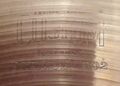
Arbiter Custom Formula 602 logo. This cymbal is probably from the mid 1960s. Charlie Watts used a 16" Arbiter Custom Formula 602 for many years before it cracked.
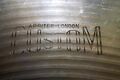
Arbiter Custom pricing and available sizes indicate the "Custom" might been a Stambul with a different emboss.
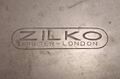
Arbiter Zilko
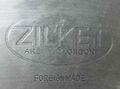
Arbiter Zilket
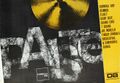
'71/'72 Dallas-Arbiter catalog
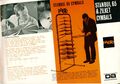
'71/'72 Dallas-Arbiter catalog
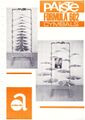
1968 Arbiter Ltd. catalog

1968 Arbiter Ltd. price list
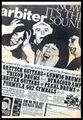
1964 Arbiter advert


SISME: Italy
SISME were the Italian importers and distributors for Paiste.
SISME had Paiste add "high performance" to the stamp on all the imported models, they also added "SISME distribution in red ink on the bottom of the cymbals.
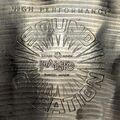
Sound creation logo with SISME "high performance"
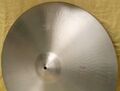
Preserial 602 thin with "high performance" stamp
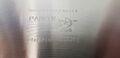
"high performance" stamp
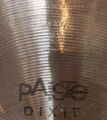
"high performance" stamp
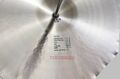
602 sound edge with "SISME distribution" stamped in red


Pearl: Japan
There was a time when Pearl distributed Paiste in Japan. From research that time period seems to run from 1969 to 1979.
Below is a page from a 1979 Pearl JDM catalog showing the selection of Sound Creation, Formula 602, 2002, and 404's.
Of note here is the selection of 404s: it contains actual 404s and restamped Dixies as indicated by some of the sizes (12") and the Medium Thin and Crash Ride options.
The Dixie cymbals have a different emboss that includes the Pearl logo (see below).
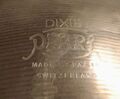
Dixie with Pearl logo included in stamp
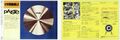
Paiste selection in 1974 Pearl JDM catalog. Shows Pearl was selling Giant Beats as well as 602s and Dixies
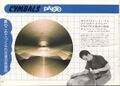
1975 JDM catalog
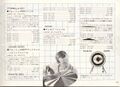
1975 JDM catalog - 2002s in - Giant Beats out.
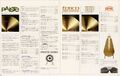
1976 JDM catalog
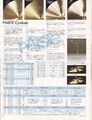
1979 JDM catalog


U.S. distributors before 1965
Prior to Ludwig's exclusive deal with Paiste in ~1965 it looks like Bonne Music Center in Syracuse, NY was one of "the" places to get a Formula 602 in the early 1960s.
The cymbals even got an alternate emboss logo with the Dynastar name. Why the Dynastar name? That remains unclear. Around this time, the store also started importing a lot of other instruments from overseas, so maybe they tied them all together under the Dynastar brand name.


Oddball distributors
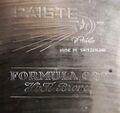
602 "hifi bronce", bronce is Spanish for bronze, possibly a Spanish distributor?

- 1998 Paiste.com
Return to the Paiste Series Portal
Return to the Paiste Main Page
