Difference between revisions of "Identify Your Paistes"
| Line 1: | Line 1: | ||
| − | It is not uncommon for people to come across Paistes that are not completely identifiable. This includes vintage cymbals which the ink stamped logos and labels have been removed or faded. More modern cymbals can be rendered ambiguous if cleaned improperly. | + | __NOEDITSECTION__ |
| + | == Identify Your Paistes == | ||
| + | <div style="float:right">__TOC__</div> | ||
| + | It is not uncommon for people to come across Paistes that are not completely identifiable. This includes vintage cymbals which the ink stamped logos and labels have been removed or faded.<br> | ||
| + | More modern cymbals can be rendered ambiguous if cleaned improperly. | ||
This page includes points used to identify cymbals that do not have proper labeling that has survived. | This page includes points used to identify cymbals that do not have proper labeling that has survived. | ||
| Line 9: | Line 13: | ||
There are several alloys used in the production of Paistes. The easiest way to determine the alloy of an unknown cymbal is visually. However, the color may be difficult to judge in digital photographs. It is recommended that when trying to identify a cymbal that it be done in person. Comparing to a cymbal of a known alloy is helpful if one is not familiar with the hues of the different alloys. | There are several alloys used in the production of Paistes. The easiest way to determine the alloy of an unknown cymbal is visually. However, the color may be difficult to judge in digital photographs. It is recommended that when trying to identify a cymbal that it be done in person. Comparing to a cymbal of a known alloy is helpful if one is not familiar with the hues of the different alloys. | ||
| − | The formulae noted below refers to the amount of tin is mixed in with the main metal ingredient, copper. So, the B8 formula would be 8% tin to 92% copper, for example. The Brass and Nickel-Silver alloys differ slightly from this formula scheme. | + | The formulae noted below refers to the amount of tin is mixed in with the main metal ingredient, copper. So, the B8 formula would be 8% tin to 92% copper, for example. The Brass and Nickel-Silver alloys differ slightly from this formula scheme (see below). |
== B20 Alloy == | == B20 Alloy == | ||
| − | B20 tends to have a silver or white color hue. It is more pale than either the B15 and B8 alloys. The copper in the alloy will oxidize when exposed to excessive moisture. | + | B20 (80% copper / 20% tin) tends to have a silver or white color hue. It is more pale than either the B15 and B8 alloys. The copper in the alloy will oxidize when exposed to excessive moisture. |
Series that use this alloy: [[Paiste SUPER FORMULA 602#SUPER FORMULA 602 |SUPER FORMULA 602]], [[Paiste Formula 602#Formula 602|Formula 602]], [[Paiste Sound Creation#Sound Creation|Sound Creation]], [[Paiste Twenty#Twenty|Twenty]], [[Paiste Twenty#Twenty Custom Collection|Twenty Custom Collection]], and [[Paiste Twenty#Masters|Twenty Masters Collection]]. | Series that use this alloy: [[Paiste SUPER FORMULA 602#SUPER FORMULA 602 |SUPER FORMULA 602]], [[Paiste Formula 602#Formula 602|Formula 602]], [[Paiste Sound Creation#Sound Creation|Sound Creation]], [[Paiste Twenty#Twenty|Twenty]], [[Paiste Twenty#Twenty Custom Collection|Twenty Custom Collection]], and [[Paiste Twenty#Masters|Twenty Masters Collection]]. | ||
| Line 22: | Line 26: | ||
File:SC 17 short cr.jpg|Sound creation | File:SC 17 short cr.jpg|Sound creation | ||
File:Paiste Twenty Masters 18 Dark Crash 1.jpg|Masters | File:Paiste Twenty Masters 18 Dark Crash 1.jpg|Masters | ||
| − | |||
</gallery> | </gallery> | ||
== B15 (Signature) Alloy == | == B15 (Signature) Alloy == | ||
| − | Our "Sound Alloy" is the first bronze formula ever developed specifically for making cymbal sounds.<br> | + | Our "Sound Alloy" (85% copper / 25% tin) is the first bronze formula ever developed specifically for making cymbal sounds.<br> |
When we achieved break-through in the development process in 1988, it became apparent that the sound potency in our new bronze surpassed our wildest expectations. To date, we have created Paiste Line "Signature", Sound Formula, and the new Paiste Line "Traditional" collection, convincingly substantiating the incredible sound range of our patented "Sound Alloy". (1)<br> | When we achieved break-through in the development process in 1988, it became apparent that the sound potency in our new bronze surpassed our wildest expectations. To date, we have created Paiste Line "Signature", Sound Formula, and the new Paiste Line "Traditional" collection, convincingly substantiating the incredible sound range of our patented "Sound Alloy". (1)<br> | ||
| Line 45: | Line 48: | ||
== B8 (2002) Alloy == | == B8 (2002) Alloy == | ||
| − | B8 bronze has a noticeable orange hue to it. This is readily seen in clean cymbals, but is also present in cymbals that have developed a patina. One noticeable exception is the RUDE line. RUDEs are B8 cymbals but have a characteristic unlathed appearance. The | + | B8 bronze (92% copper / 8% tin)has a noticeable orange hue to it. This is readily seen in clean cymbals, but is also present in cymbals that have developed a patina. One noticeable exception is the RUDE line. RUDEs are B8 cymbals but have a characteristic unlathed appearance. The color of a RUDE may have a tint (green or brown usually) but the lack of lathing and the raw color from the annealing process give them away. Moisture will cause B8 to develop a tell tale blue/green oxide. |
Series that use this alloy: [[Paiste Alpha|Alpha]], [[Paiste Dimensions|Dimensions]], [[Paiste Giant Beat|Giant Beat]], [[Paiste RUDE|RUDE]], [[Paiste 2002|2002]], [[Paiste 3000|3000]], [[Paiste 2000|2000]], [[Paiste 505|505]], [[Paiste 404|404]], [[Paiste Stambul65|Stambul 65]], [[Paiste Stambul B8|Stambul B8 (after '71)]], [[Paiste Dixie|Dixie (after '71)]], among others. | Series that use this alloy: [[Paiste Alpha|Alpha]], [[Paiste Dimensions|Dimensions]], [[Paiste Giant Beat|Giant Beat]], [[Paiste RUDE|RUDE]], [[Paiste 2002|2002]], [[Paiste 3000|3000]], [[Paiste 2000|2000]], [[Paiste 505|505]], [[Paiste 404|404]], [[Paiste Stambul65|Stambul 65]], [[Paiste Stambul B8|Stambul B8 (after '71)]], [[Paiste Dixie|Dixie (after '71)]], among others. | ||
<gallery> | <gallery> | ||
| + | File:Paiste 2002 20 China 1.jpg|2002 | ||
| + | File:Paiste 2002 15 Sound Edge Hi-Hat 1.jpg|2002 | ||
| + | File:Paiste Giant Beat 18 Multi 1.jpg|Giant Beat | ||
File:18 thin cr 65.jpg|Stambul65 | File:18 thin cr 65.jpg|Stambul65 | ||
File:Stambul 16 thin.jpg|Stambul B8 '71 to '78 | File:Stambul 16 thin.jpg|Stambul B8 '71 to '78 | ||
File:404 Brown Label 20 Ride.jpg| 404 | File:404 Brown Label 20 Ride.jpg| 404 | ||
| − | |||
| − | |||
| − | |||
</gallery> | </gallery> | ||
== Brass MS63 == | == Brass MS63 == | ||
| − | Brass is a copper | + | Brass is a copper/zinc alloy, most commonly in a 63% copper / 37% zinc ratio, used in some entry level Paiste cymbals. Christian Wenzel of Paiste notes that, “Brass sounds slightly muffled in comparison to all bronze alloys.”<br> |
| + | Paul Francis at Zildjian describes brass cymbals as being “limited” in sound and durability and “the most basic cymbals you can hit.” Judging by these limitations, it probably comes as no surprise that brass is used much less commonly than bronze. This alloy is almost exclusively found in beginner lines of instruments.<br> | ||
| + | If your store carries entry-level kits that come with complimentary cymbals, they’re likely to be brass. | ||
| − | Series that use this alloy: | + | Series that use this alloy: [[Paiste Brass-Tones|Brass-Tones]], [[Paiste 101 Brass|101 Brass]], [[Paiste 200|200]], [[Paiste 302|302]] |
<gallery> | <gallery> | ||
File:34928562 10156393362240349 5077287054866382848 n.jpg | File:34928562 10156393362240349 5077287054866382848 n.jpg | ||
| + | File:101 brass.png | ||
File:35383742 10156405390565349 4477234751580667904 n.jpg | File:35383742 10156405390565349 4477234751580667904 n.jpg | ||
File:34862109 10156393192900349 6059552904459583488 n.jpg | File:34862109 10156393192900349 6059552904459583488 n.jpg | ||
| Line 72: | Line 78: | ||
== Nickel Silver NS12 == | == Nickel Silver NS12 == | ||
| − | + | Composing roughly of 65% copper / 15% nickel: Cymbals made of nickel silver have a steely silver color. This color tends to be more sterile looking then B20 alloy, resembling steel in many cases. Nickel silver is known for not corroding easily and may only have a light surface patina, rendering them more of a grey color. If exposed to moisture, they will not develop the blue/green oxide indicative of cupric alloys. | |
Series that use this alloy: [[Paiste Stambul|Stambul (pre '71)]], [[Paiste Dixie|Dixie (pre '71)]], [[Paiste Ludwig|Ludwig]], [[Paiste Stanople|Stanople]], and [[Paiste Super|Super]], among others. | Series that use this alloy: [[Paiste Stambul|Stambul (pre '71)]], [[Paiste Dixie|Dixie (pre '71)]], [[Paiste Ludwig|Ludwig]], [[Paiste Stanople|Stanople]], and [[Paiste Super|Super]], among others. | ||
| Line 81: | Line 87: | ||
File:Stambul NS 12 20 ride.jpg|Stambul "NS12" 20" ride | File:Stambul NS 12 20 ride.jpg|Stambul "NS12" 20" ride | ||
File:Ludwig standard 22 ride.jpg|Ludwig standard "NS12" 22" ride | File:Ludwig standard 22 ride.jpg|Ludwig standard "NS12" 22" ride | ||
| + | File:Super meduim.jpg|Super mediium | ||
| + | File:14 stanople marching late 60s.jpg|14" Stanople marching | ||
</gallery> | </gallery> | ||
Revision as of 16:11, 31 August 2021
Identify Your Paistes
It is not uncommon for people to come across Paistes that are not completely identifiable. This includes vintage cymbals which the ink stamped logos and labels have been removed or faded.
More modern cymbals can be rendered ambiguous if cleaned improperly.
This page includes points used to identify cymbals that do not have proper labeling that has survived.
Please note that for this conversation, the term "embossed" refers to anything pressed into the metal of the cymbal, and the word "stamped" refers to any wording applied in ink. In other arenas these terms may not be used in the same way.
Alloys
There are several alloys used in the production of Paistes. The easiest way to determine the alloy of an unknown cymbal is visually. However, the color may be difficult to judge in digital photographs. It is recommended that when trying to identify a cymbal that it be done in person. Comparing to a cymbal of a known alloy is helpful if one is not familiar with the hues of the different alloys.
The formulae noted below refers to the amount of tin is mixed in with the main metal ingredient, copper. So, the B8 formula would be 8% tin to 92% copper, for example. The Brass and Nickel-Silver alloys differ slightly from this formula scheme (see below).
B20 Alloy
B20 (80% copper / 20% tin) tends to have a silver or white color hue. It is more pale than either the B15 and B8 alloys. The copper in the alloy will oxidize when exposed to excessive moisture.
Series that use this alloy: SUPER FORMULA 602, Formula 602, Sound Creation, Twenty, Twenty Custom Collection, and Twenty Masters Collection.
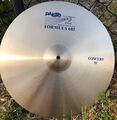
Formula 602
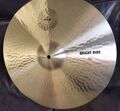
Sound creation

Sound creation
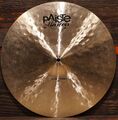
Masters


B15 (Signature) Alloy
Our "Sound Alloy" (85% copper / 25% tin) is the first bronze formula ever developed specifically for making cymbal sounds.
When we achieved break-through in the development process in 1988, it became apparent that the sound potency in our new bronze surpassed our wildest expectations. To date, we have created Paiste Line "Signature", Sound Formula, and the new Paiste Line "Traditional" collection, convincingly substantiating the incredible sound range of our patented "Sound Alloy". (1)
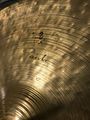
B15, or Proprietary Signature Bronze (PSB) alloy, can be identified by lustrous yellow coloration. Like all bronze, a blue/green oxide will be found when exposed to excessive moisture. This cupric oxide is what gives the Statue of Liberty it's characteristic color.
In early promotional materials, Paiste referred to this alloy as PSA - Paiste Sound Alloy.
Series that use this alloy: Signature, Signature Dark Energy, Signature Traditionals, and Visions (certain models).
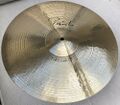
Signature
- Paiste Signature Dark Energy 17 Dark Crash.jpg
Signature Dark Energy
Signature Traditionals
- Paiste Visions 13 Heavy Hi Hat.jpg
Visions


B8 (2002) Alloy
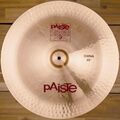
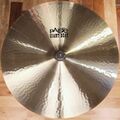
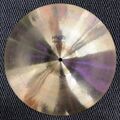
B8 bronze (92% copper / 8% tin)has a noticeable orange hue to it. This is readily seen in clean cymbals, but is also present in cymbals that have developed a patina. One noticeable exception is the RUDE line. RUDEs are B8 cymbals but have a characteristic unlathed appearance. The color of a RUDE may have a tint (green or brown usually) but the lack of lathing and the raw color from the annealing process give them away. Moisture will cause B8 to develop a tell tale blue/green oxide.
Series that use this alloy: Alpha, Dimensions, Giant Beat, RUDE, 2002, 3000, 2000, 505, 404, Stambul 65, Stambul B8 (after '71), Dixie (after '71), among others.
2002

2002
Giant Beat

Stambul65
Stambul B8 '71 to '78
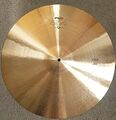
404


Brass MS63
Brass is a copper/zinc alloy, most commonly in a 63% copper / 37% zinc ratio, used in some entry level Paiste cymbals. Christian Wenzel of Paiste notes that, “Brass sounds slightly muffled in comparison to all bronze alloys.”
Paul Francis at Zildjian describes brass cymbals as being “limited” in sound and durability and “the most basic cymbals you can hit.” Judging by these limitations, it probably comes as no surprise that brass is used much less commonly than bronze. This alloy is almost exclusively found in beginner lines of instruments.
If your store carries entry-level kits that come with complimentary cymbals, they’re likely to be brass.
Series that use this alloy: Brass-Tones, 101 Brass, 200, 302


Nickel Silver NS12
Composing roughly of 65% copper / 15% nickel: Cymbals made of nickel silver have a steely silver color. This color tends to be more sterile looking then B20 alloy, resembling steel in many cases. Nickel silver is known for not corroding easily and may only have a light surface patina, rendering them more of a grey color. If exposed to moisture, they will not develop the blue/green oxide indicative of cupric alloys.
Series that use this alloy: Stambul (pre '71), Dixie (pre '71), Ludwig, Stanople, and Super, among others.
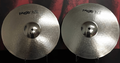
402 nickel silver "NS12" hi-hats

Stambul "NS12" 20" ride
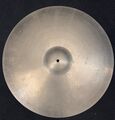
Ludwig standard "NS12" 22" ride
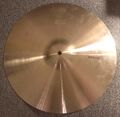
Super mediium
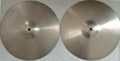
14" Stanople marching


Serial Numbers
Please see the special page that examines these in detail - Serial Numbers
Prototypes may or may not adhere to the serial number patterns in all respects.
Series Logos
The other important embossed information is the series stamp. Early Paistes used this method exclusively for identification of the cymbal. The typical embossed logos can be see on the various series pages. In many cases this was later replaced with ink stamped logos.
Embossed logos are usually found at the 12:00 position on the cymbal.
Spotting details include:
Very early 2002 cymbals used a logo with a border that is not seen in later examples. It is thought that this indicates cymbals from 1971. Examples have not included serial numbers indicating that they were from 1971 or 1972. Early Traditional models had an embossed or etched Paiste script logo. This was discontinued after the first or second year. Cracking about the embossed logo has been sited as a reason for this change.
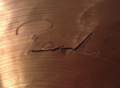
Traditional Emboss Logo Crack
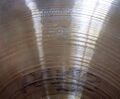
1971 preserial 2002 logo and emboss (notice lack of "2002" name under "Paiste")

'81 602 transition from emboss logo/black to blue label

Pre '81 German black label 505 logo
- 404 brown label.jpg
404 brown label
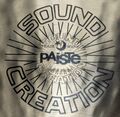
'81 Sound creation transition from emboss to black label
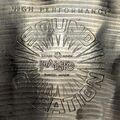
pre '81 Sound creation with "high performance" stamp for SISME dist, Italy
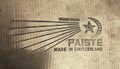
Vintage Giant beat emboss logo

Zilco

Super
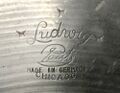
Ludwig-Paiste

Ludwig "standard"
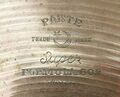
Super formula 602

Ludwig-Stanople

Stambul 65
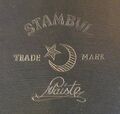
Stambul

Dixie


Ink Stamps
Paiste started to use ink stamps to identify their products a few decades ago. These are used to identify the series, type and size of the cymbals. There are several extra ink stamps found on some cymbals, including identification of the Seven Sound Set number, and more recently special artwork to highlight artist models.
Series Stamps
Found in the 12:00 position these serve the same purpose as the embossed logos. They have come to replace embossed logos. But there was a transitional period where both inked and embossed logos both appeared on cymbals. This is generally the "black label" period as seen in the Formula 602 and 2002 series. The "black label" era refers to early ink stamps where only black was used in the series logo.
With the shift away from embossed logos, Paiste started adapting the use of different colo red inks that correspond to the various series. For example, 2002s have a distinctive red logo, 505s are known for a green logo, and the final era of the Formula 602s are referred to as "blue labels" for obvious reasons.
Prototypes
Prototypes tend to be a bit non standard in their labeling. It is common practice for the 12:00 position to contain the word "Paiste" in large print. In smaller print, the word "Prototype" normally appears in a smaller size just below this. Examples exist the do not include the word "Prototype". These stamps have only been observed in black on non-colorsound treated cymbals, and white for colored cymbals.
Spotting details include:
Prototypes do not contain any production series identifiers, except for a small sticker often found on the back of the cymbal. It is unclear whether this is an indication of what series the cymbals was designed for or if it is only used as a guide for pricing the cymbal by retailers.
Prototypes often use "generic" model designations, i.e., "Crash", "Ride", "Hi-Hat", et cetera.
Size Stamps
During the "black label" era, size stamps appeared under the bell. They later were moved to the front of the cymbal and placed below the type identifier in the 03:00 position. Like the type label, they are usually in a sans serif font. When using the sans serif font, the number is in a bold type face. There has been subtle variation in the font over the years, such as the inch symbol being in either a bold or non-bold font.
Spotting details include:
- RUDES uses a stencil font for the type label, but the standard sans serif font for the size.
- In the 1990s the size has become part of the type label for the Traditional and Signature series
- Like the type label, the size label of prototype have been found in the 03:00 position and 12:00 position.
- Giant Beats lack the size on both the original, and re-issues.
Artist Model Stamps
There have been a limited number of artists model stamps ranging from simple sans serif text to graphics.
Spotting details include:
- The Formula 602 Joe Morello cymbals included his name stamped in the 03:00 position with the type identification.
- The phrase "Seven Sound Set" and the corresponding type number is stamped in the 03:00 position in red ink.
- The Sheila E. Sex Cymbal is unusual in that the stylized artists name is stamped in the 12:00 and the term "Sex Cymbal" appears in the 06:00 position.
- The RUDE 24" Mega Power Ride (John Dolmayan) includes the "Eclipse" moniker in the 03:00 position just above the type label.
- The initial release of the Black Alphas use a unique gold tones ink and include the Slipknot logo in the 09:00 position.
- The Signature 22" Blue Bell Ride (Stewart Copeland) features white "The Rhythmatist" logo in the 06:00 position under the cymbal type label.
- The Signature 22" Reflector Bell Ride (Nicko McBrain) has "Powerslave" written in Iron Maiden font together with Eddie stencil in 06:00 position under the cymbal type label.
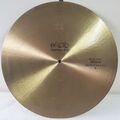
Seven Sound Set #4
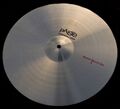
Seven Sound Set #3

Joe Morello

Joe Morello


Lathing
In the absence of embossed or stamped logos, cymbal identification can be performed by evaluating the lathing. Many series have very distinct lathing. For example, RUDES are known for not being lathed at all (with the exception of the 24" Mega Power Ride, and Innovations have the "Sound Texture" lathing that looks as if the lathing tool was allowed to skip across the surface.
Spotting details include:
Coming soon.
Hammering
In addition to the lathing, the hammering of a cymbal can be critical to identifying a cymbal when no embossed or stamped logos are found. And just as with lathing, various series have characteristic hammering. In some cases, such as the 2002 Wilds, the sub-series has a distinct heavy hammering.
Spotting details include:
Coming soon.
- 1998 Paiste.com
Return to the Paiste Series Portal
Return to the Paiste Main Page
