Difference between revisions of "Identify Your Paistes"
m |
|||
| (50 intermediate revisions by 3 users not shown) | |||
| Line 2: | Line 2: | ||
<div style="float:right">__TOC__</div> | <div style="float:right">__TOC__</div> | ||
It is not uncommon for people to come across Paistes that are not completely identifiable. This includes vintage cymbals which the ink stamped logos and labels have been removed or faded.<br> | It is not uncommon for people to come across Paistes that are not completely identifiable. This includes vintage cymbals which the ink stamped logos and labels have been removed or faded.<br> | ||
| − | More modern cymbals can be rendered ambiguous if cleaned improperly. | + | More modern cymbals can be rendered ambiguous if cleaned improperly.<br> |
| − | + | This page includes points used to identify cymbals that do not have proper labeling that has survived [http://www.cymbal.wiki/wiki/Paiste_Serial_Numbers (<b>more info is also available on the serial # page</b>).]<br> | |
| − | This page includes points used to identify cymbals that do not have proper labeling that has survived [http://www.cymbal.wiki/wiki/Paiste_Serial_Numbers (<b>more info is also available on the serial # page</b>).] | ||
| − | |||
Please note that for this conversation, the term "embossed" refers to anything pressed into the metal of the cymbal, and the word "stamped" refers to any wording applied in ink.<br> | Please note that for this conversation, the term "embossed" refers to anything pressed into the metal of the cymbal, and the word "stamped" refers to any wording applied in ink.<br> | ||
In other arenas these terms may not be used in the same way. | In other arenas these terms may not be used in the same way. | ||
| − | |||
== Alloys == | == Alloys == | ||
There are several alloys used in the production of Paiste cymbals.<br> | There are several alloys used in the production of Paiste cymbals.<br> | ||
| Line 14: | Line 11: | ||
It is recommended that when trying to identify a cymbal that it be done in person. Comparing to a cymbal of a known alloy is helpful if one is not familiar with the hues of the different alloys.<br> | It is recommended that when trying to identify a cymbal that it be done in person. Comparing to a cymbal of a known alloy is helpful if one is not familiar with the hues of the different alloys.<br> | ||
The formulae noted below refers to the amount of tin is mixed in with the main ingredient copper so for example, the B8 formula would be 8% tin to 92% copper.<br> | The formulae noted below refers to the amount of tin is mixed in with the main ingredient copper so for example, the B8 formula would be 8% tin to 92% copper.<br> | ||
| − | |||
| − | |||
| − | |||
| − | |||
| − | |||
| − | |||
| − | |||
| − | |||
| − | |||
| − | |||
| − | |||
| − | |||
| − | |||
| − | |||
| − | |||
| − | |||
| − | |||
| − | |||
| − | |||
| − | |||
| − | |||
| − | |||
| − | |||
| − | |||
== B20 "Bell bronze" Alloy == | == B20 "Bell bronze" Alloy == | ||
Bell bronze, also known as bell metal, is the traditional alloy used for fine cymbals: | Bell bronze, also known as bell metal, is the traditional alloy used for fine cymbals: | ||
| Line 48: | Line 21: | ||
Series that use this alloy: [[Paiste SUPER FORMULA 602#SUPER FORMULA 602 |SUPER FORMULA 602]], [[Paiste Formula 602#Formula 602|Formula 602]], [[Paiste Sound Creation#Sound Creation|Sound Creation]], [[Paiste Twenty#Twenty|Twenty]], [[Paiste Twenty#Twenty Custom Collection|Twenty Custom Collection]], and [[Paiste Twenty#Masters|Twenty Masters Collection]]. | Series that use this alloy: [[Paiste SUPER FORMULA 602#SUPER FORMULA 602 |SUPER FORMULA 602]], [[Paiste Formula 602#Formula 602|Formula 602]], [[Paiste Sound Creation#Sound Creation|Sound Creation]], [[Paiste Twenty#Twenty|Twenty]], [[Paiste Twenty#Twenty Custom Collection|Twenty Custom Collection]], and [[Paiste Twenty#Masters|Twenty Masters Collection]]. | ||
| − | |||
<gallery> | <gallery> | ||
File:602 19 concert.jpg| Formula 602 | File:602 19 concert.jpg| Formula 602 | ||
| + | File:Super 602 15 thin.jpg| Super Formula 602 | ||
File:SC 18 dark rd 3.jpg| Sound creation | File:SC 18 dark rd 3.jpg| Sound creation | ||
File:Paiste-twenty-masters-collection-medium-ride-20.jpg| Twenty Masters | File:Paiste-twenty-masters-collection-medium-ride-20.jpg| Twenty Masters | ||
| − | File:MASTERS 22 crisp RIDE.jpg| Masters | + | File:MASTERS 22 crisp RIDE.jpg| Masters |
File:Paiste-twenty-custom-collection-full-ride-20.jpg| Twenty Custom | File:Paiste-twenty-custom-collection-full-ride-20.jpg| Twenty Custom | ||
| + | File:602 22 ride ME.jpg| Formula 602 modern essentials | ||
</gallery> | </gallery> | ||
| − | |||
== B15 "Signature" Alloy == | == B15 "Signature" Alloy == | ||
Paiste "Sound Alloy": 15% tin / 85% copper, is the first bronze formula ever developed specifically for making cymbal sounds:<br> | Paiste "Sound Alloy": 15% tin / 85% copper, is the first bronze formula ever developed specifically for making cymbal sounds:<br> | ||
| Line 74: | Line 47: | ||
File:Sound formula.jpg| Sound formula | File:Sound formula.jpg| Sound formula | ||
</gallery> | </gallery> | ||
| − | |||
== B8 "Malleable bronze" (2002) Alloy == | == B8 "Malleable bronze" (2002) Alloy == | ||
Malleable bronze is an alloy of tin and copper comprising 8% tin / 92% copper: | Malleable bronze is an alloy of tin and copper comprising 8% tin / 92% copper: | ||
| Line 85: | Line 57: | ||
Series that use this alloy: [[Paiste 2002|2002]], [[Paiste Giant Beat|Giant Beat]], [[Paiste RUDE|RUDE]], [[Paiste Dimensions|Dimensions]], [[Paiste Innovations|Innovations]], [[Paiste Alpha|Alpha]], [[Paiste 505|505]], [[Paiste 404|404]], [[Paiste Stambul65|Stambul 65]], [[Paiste Stambul B8|Stambul B8 (after 1970)]], [[Paiste Dixie|Dixie B8 (after 1970)]], [[Paiste 3000|3000]], [[Paiste 2000|2000]], [[Paiste 1000|1000]] among many others. | Series that use this alloy: [[Paiste 2002|2002]], [[Paiste Giant Beat|Giant Beat]], [[Paiste RUDE|RUDE]], [[Paiste Dimensions|Dimensions]], [[Paiste Innovations|Innovations]], [[Paiste Alpha|Alpha]], [[Paiste 505|505]], [[Paiste 404|404]], [[Paiste Stambul65|Stambul 65]], [[Paiste Stambul B8|Stambul B8 (after 1970)]], [[Paiste Dixie|Dixie B8 (after 1970)]], [[Paiste 3000|3000]], [[Paiste 2000|2000]], [[Paiste 1000|1000]] among many others. | ||
| − | |||
<gallery> | <gallery> | ||
File:Paiste 2002 20 China 1.jpg| 2002 | File:Paiste 2002 20 China 1.jpg| 2002 | ||
| Line 108: | Line 79: | ||
File:Pst7.png| Pst 7 | File:Pst7.png| Pst 7 | ||
</gallery> | </gallery> | ||
| − | |||
== NS12 Nickel Silver - CuNi12Zn24 (CuNi12 for short)== | == NS12 Nickel Silver - CuNi12Zn24 (CuNi12 for short)== | ||
Composing roughly of 64% copper / 12% nickel / 24% zinc: | Composing roughly of 64% copper / 12% nickel / 24% zinc: | ||
| − | *Paiste's go to alloy from 1947 to 1970/71 for some of | + | *Paiste's go to alloy from 1947 to 1970/71 for some of the top line and all its lower line cymbals. |
*Nickel silver is malleable and available as commercial sheet metal, and gives a bright tone but without the shimmer and sensitivity of tin bronzes. | *Nickel silver is malleable and available as commercial sheet metal, and gives a bright tone but without the shimmer and sensitivity of tin bronzes. | ||
*In the early to mid 20th century nickel alloy cymbals were far more widely produced and used, and so many older recordings were probably made using cymbals with a significant nickel content. | *In the early to mid 20th century nickel alloy cymbals were far more widely produced and used, and so many older recordings were probably made using cymbals with a significant nickel content. | ||
| Line 121: | Line 91: | ||
Series that use this alloy: [[Paiste Stambul|Stambul (pre '71)]], [[Paiste Dixie|Dixie (pre '71)]], [[Paiste Ludwig|Ludwig]], [[Paiste Stanople|Stanople]], and [[Paiste Super|Super]], among others.<br> | Series that use this alloy: [[Paiste Stambul|Stambul (pre '71)]], [[Paiste Dixie|Dixie (pre '71)]], [[Paiste Ludwig|Ludwig]], [[Paiste Stanople|Stanople]], and [[Paiste Super|Super]], among others.<br> | ||
<gallery> | <gallery> | ||
| − | File:Zilko standard 1.jpg|Zilko | + | File:Zilko standard 1.jpg|Zilko Standard |
File:Ziket 18 cr ride.jpg| Arbiter Zilket | File:Ziket 18 cr ride.jpg| Arbiter Zilket | ||
File:14 standard hi hats.jpg| Standard Hi hats | File:14 standard hi hats.jpg| Standard Hi hats | ||
File:NS12 402s.png|402 nickel silver hi-hats | File:NS12 402s.png|402 nickel silver hi-hats | ||
File:Stambul NS 12 20 ride.jpg|NS12 Stambul 20" ride | File:Stambul NS 12 20 ride.jpg|NS12 Stambul 20" ride | ||
| − | File:Ludwig standard 22 ride.jpg|Ludwig | + | File:Ludwig standard 22 ride.jpg|Ludwig Standard 22" ride |
File:13 ludwig standard HH.jpg|Ludwig Standard 13" hi hats | File:13 ludwig standard HH.jpg|Ludwig Standard 13" hi hats | ||
File:14 stanople marching late 60s.jpg|14" Stanople marching | File:14 stanople marching late 60s.jpg|14" Stanople marching | ||
</gallery> | </gallery> | ||
| − | |||
== MS63 Brass == | == MS63 Brass == | ||
Brass is a copper/zinc alloy, most commonly in a 63% copper / 37% zinc ratio: | Brass is a copper/zinc alloy, most commonly in a 63% copper / 37% zinc ratio: | ||
| Line 144: | Line 113: | ||
File:34928562 10156393362240349 5077287054866382848 n.jpg| 200 | File:34928562 10156393362240349 5077287054866382848 n.jpg| 200 | ||
File:101 brass.png| 101 | File:101 brass.png| 101 | ||
| − | File:35383742 10156405390565349 4477234751580667904 n.jpg| Brass | + | File:35383742 10156405390565349 4477234751580667904 n.jpg| Brass Tones |
File:34862109 10156393192900349 6059552904459583488 n.jpg| 302 | File:34862109 10156393192900349 6059552904459583488 n.jpg| 302 | ||
</gallery> | </gallery> | ||
| − | |||
== Serial Numbers == | == Serial Numbers == | ||
[[Paiste_Serial_Numbers|<b>Please see the special "serial number page" that examines these in detail.</b>]]<br> | [[Paiste_Serial_Numbers|<b>Please see the special "serial number page" that examines these in detail.</b>]]<br> | ||
Prototypes may or may not adhere to the serial number patterns in all respects.<br> | Prototypes may or may not adhere to the serial number patterns in all respects.<br> | ||
| + | == Swiss and German factories == | ||
| + | [[File:German 602.jpg|thumb|right|350px|Early 602 finished at the German factory]] | ||
| + | The German factory was the 1st, to start production around 1947/48, in 1957 Robert Paiste moved to Nottwil Switzerland by himself and setup the Swiss factory. The German factory is the sole producer of gongs, and has been since opening.<br> | ||
| + | Both factories made both levels of product except the German factory didn't make B20 cymbals or Giant beats.<br> | ||
| + | Many 2002's were made in 70s and 80s at the German factory and the German factory also "finished" a small number of 602s during the preserial days (** see below). <br> | ||
| + | The German factory made practically all the vintage Paiste lines: 2002 (up to 1986), 2000, 1000, 400, 200, Stambul '65, Stambul, 404, 505, Ludwig cymbals, Dixies, Supers, Stanoples, Zilkos, etc.<br> | ||
| + | They still make all the lower lines and "OEM" cymbals.<br> | ||
| + | There is a notion among some that the Swiss 2002 versions are better quality... they are not, some German versions are usually a little heavier and a little darker sounding. <br> | ||
| + | People are less familiar with German Paistes because the Swiss factory did most of the exporting, so the U.S. didn't get German 2002's or 404's or 505's.<br> | ||
| + | The German Paistes were meant for the German market and probably certain countries in Central Europe, everyone else got Swiss cymbals.<br> | ||
| + | |||
| + | (**) Correspondence with Paiste Switzerland:<br> | ||
| + | <i>"By reason of a distributed capacitance, we have some Formula 602's that have been finished in Germany at the end of the 1950's.<br> | ||
| + | They were annealed and hammered in Switzerland and Paiste Germany has completed them. That’s the reason they have a stamp “made in Germany”.<br> | ||
| + | Kind regards, Customer Service Department<br> | ||
| + | Paiste Switzerland"</i> | ||
| + | |||
| + | We have found a return of German 602's from about 1975 to 1977, they can be identified from the archaic "E over trade" stamp (no "made in Switzerland") and a serial number starting with a "1". <br><br> | ||
== Series Logos/stamps/emboss == | == Series Logos/stamps/emboss == | ||
The other important embossed information is the series stamp. Early Paistes used this method exclusively for identification of the cymbal. The typical embossed logos can be see on the various series pages.<br> | The other important embossed information is the series stamp. Early Paistes used this method exclusively for identification of the cymbal. The typical embossed logos can be see on the various series pages.<br> | ||
| Line 157: | Line 143: | ||
Spotting details include: | Spotting details include: | ||
| − | Very early 2002 cymbals used a logo with a border that is not seen in later examples. It is thought that this indicates cymbals from 1971. Examples have not included serial numbers indicating that they were from 1971 or 1972.<br> | + | Very early 2002 cymbals used a logo with a border that is not seen in later examples. It is thought that this indicates cymbals from 1971. Examples have not included serial numbers indicating that they were from 1971 or early 1972.<br> |
| − | Early Traditional models had an embossed or | + | Early Traditional models had an embossed or stamped Paiste script logo. This was discontinued after the first or second year: cracking about the embossed logo has been sighted as a reason for this change.<br> |
<gallery> | <gallery> | ||
| − | File:Trad-logo-crack. | + | File:Trad-logo-crack.jpg|Signature Traditional series emboss logo w/crack |
| − | File:2002 | + | File:2002 box stamp.jpg|Early 2002 stamp with border, aka: "box stamp" |
| − | File:2002 | + | File:German 2002 logo.jpg|German 2002 stamp |
File:2002 logo 1.jpg|Swiss 2002 stamp | File:2002 logo 1.jpg|Swiss 2002 stamp | ||
File:602 stamp 1.jpg|602 "solid stamp" | File:602 stamp 1.jpg|602 "solid stamp" | ||
| − | File:Super formula 602.jpg|Super | + | File:Super formula 602.jpg|Super Formula 602 |
File:505 black label 1 line china logo '81 German.jpg|German 505 stamp | File:505 black label 1 line china logo '81 German.jpg|German 505 stamp | ||
File:404 stamp 2.jpg|404 stamp | File:404 stamp 2.jpg|404 stamp | ||
| − | File:SC sisme dist.jpg |Sound | + | File:SC sisme dist.jpg |Sound Creation stamp |
File:Rude logo 2.jpg|Rude 1st. generation (early '80's) ink stamp | File:Rude logo 2.jpg|Rude 1st. generation (early '80's) ink stamp | ||
| − | File:Giant beat logo.jpg|Vintage Giant | + | File:Giant beat logo.jpg|Vintage Giant Beat stamp |
File:Stambul NS12 logo.JPG|Stambul | File:Stambul NS12 logo.JPG|Stambul | ||
File:Dixie swiss.jpg|Dixie | File:Dixie swiss.jpg|Dixie | ||
| Line 185: | Line 171: | ||
Taking cues from the new 1980 Rude models with it's large printing of the logo, size and model name; Paiste applies the same labeling format to all it's current models the following year.<br> | Taking cues from the new 1980 Rude models with it's large printing of the logo, size and model name; Paiste applies the same labeling format to all it's current models the following year.<br> | ||
Paiste started to use ink stamps to identify their products mid 1981. These are used to identify the series, type and size of the cymbals.<br> | Paiste started to use ink stamps to identify their products mid 1981. These are used to identify the series, type and size of the cymbals.<br> | ||
| − | At the same time Paiste also | + | At the same time Paiste also changed the serial number format adding "Paiste" and the series name above the serial number: [https://www.cymbal.wiki/wiki/Paiste_Serial_Numbers#1981_-_1986 <b>detailed info here</b>].<br> |
As with all of Paiste's production through the years; there was a transition period, it was common for Paiste to "restamp" black label cymbals with the new printed logo, the old emboss/stamp can be clearly seen under the printing (see examples below).<br> | As with all of Paiste's production through the years; there was a transition period, it was common for Paiste to "restamp" black label cymbals with the new printed logo, the old emboss/stamp can be clearly seen under the printing (see examples below).<br> | ||
There is some confusion as to when a cymbal is made because it has a printed logo, the serial number and formatting of the serial number is the most accurate way to determine that.<br> | There is some confusion as to when a cymbal is made because it has a printed logo, the serial number and formatting of the serial number is the most accurate way to determine that.<br> | ||
<gallery> | <gallery> | ||
| − | File:Sc transition stamp.jpg|Sound | + | File:Sc transition stamp.jpg|Sound Creation with stamp and printed logo |
File:602 transition.jpg|602 with stamp and printed logo | File:602 transition.jpg|602 with stamp and printed logo | ||
| − | File:602 1975 restamped dark ride 3.jpg|1975 | + | File:602 1975 restamped dark ride 3.jpg|1975 Dark Ride with 602 printed logo in black ink |
File:505 transition.jpg|505 with stamp and printed logo | File:505 transition.jpg|505 with stamp and printed logo | ||
| − | File:505 stambul transition.jpg|Stambul that was relabeled as a 505 | + | File:505 stambul transition.jpg|Stambul that was relabeled as a 505 |
</gallery> | </gallery> | ||
== Size Stamps == | == Size Stamps == | ||
| − | During the "black label" era, size stamps appeared under the bell. During the "printed label era" (1981) they were moved to the front of the cymbal and placed below the type identifier | + | During the "black label" era, size stamps appeared under the bell. During the "printed or colored label era" (starting in 1981) they were moved to the front of the cymbal and placed below the "type" identifier at the 03:00 position.<br> |
| − | Like the type label, they are usually in a sans serif font. When using the sans serif font, the number is in a bold typeface.<br> | + | Like the "type" label, they are usually in a sans serif font. When using the sans serif font, the number is in a bold typeface.<br> |
| − | There has been subtle variation in the font over the years, such as the inch | + | There has been subtle variation in the font over the years, such as the inch size being in either a bold or non-bold font: [https://www.cymbal.wiki/wiki/Paiste_Serial_Numbers#.3F_-_1971_preserial_and_transition_models <b>detailed info here</b>]<br> |
Spotting details include:<br> | Spotting details include:<br> | ||
*RUDES uses a stencil font for the type label, but the standard sans serif font for the size. | *RUDES uses a stencil font for the type label, but the standard sans serif font for the size. | ||
*In the 1990s the size has become part of the type label for the Traditional and Signature series | *In the 1990s the size has become part of the type label for the Traditional and Signature series | ||
*Like the type label, the size label of prototype have been found in the 03:00 position and 12:00 position. | *Like the type label, the size label of prototype have been found in the 03:00 position and 12:00 position. | ||
| − | |||
== Prototypes == | == Prototypes == | ||
Prototypes tend to be a bit non standard in their labeling. It is common practice for the 12:00 position to contain the word "Paiste" in large print. In smaller print, at 6:00 the word "Prototype" normally appears in a smaller size. Examples exist the do not include the word "Prototype".<br> | Prototypes tend to be a bit non standard in their labeling. It is common practice for the 12:00 position to contain the word "Paiste" in large print. In smaller print, at 6:00 the word "Prototype" normally appears in a smaller size. Examples exist the do not include the word "Prototype".<br> | ||
| − | |||
Spotting details include: Prototypes do not contain any production series identifiers, except for a small sticker often found on the back of the cymbal. It is unclear whether this is an indication of what series the cymbals was designed for or if it is only used as a guide for pricing the cymbal by retailers. Prototypes often use "generic" model designations, i.e., "Crash", "Ride", "Hi-Hat", et cetera.<br> | Spotting details include: Prototypes do not contain any production series identifiers, except for a small sticker often found on the back of the cymbal. It is unclear whether this is an indication of what series the cymbals was designed for or if it is only used as a guide for pricing the cymbal by retailers. Prototypes often use "generic" model designations, i.e., "Crash", "Ride", "Hi-Hat", et cetera.<br> | ||
| − | <gallery> | + | Also, cymbals that were custom ordered often have, but not always, "PROTOTYPE" on them, even though they weren't prototypical. These cymbals will have the series name and model. Cymbal models & sizes no longer offered are usually the most seen custom orders. While Paiste doesn't approve of every custom order request, they will make them, but with an additional charge. (30%) Contact a Paiste dealer for more information on custom cymbals. (HINT: Search online "Paiste Custom" and find drum shops that have them in stock. They are good ones to contact, as Paiste has made custom cymbals for them in the past.) :) |
| + | <gallery heights="200" caption="Paiste Prototypes" mode="packed"> | ||
File:35548166 10156416311555349 3525729943092723712 n.jpg | File:35548166 10156416311555349 3525729943092723712 n.jpg | ||
File:Sig 2002 crystal HH PT.jpg | File:Sig 2002 crystal HH PT.jpg | ||
| Line 221: | Line 206: | ||
File:25 jun customs 094.jpg | File:25 jun customs 094.jpg | ||
</gallery> | </gallery> | ||
| − | |||
== Artist Model Stamps == | == Artist Model Stamps == | ||
There have been a limited number of artists model stamps ranging from simple sans serif text to graphics.<br> | There have been a limited number of artists model stamps ranging from simple sans serif text to graphics.<br> | ||
Spotting details include: | Spotting details include: | ||
| − | * | + | ==== [[Paiste Alpha#Alpha|Alpha]] ==== |
| − | *The | + | * [[Paiste Alpha#Black Alpha|Black Alpha]]s (initial release) use a unique gold tones ink and include the Slipknot logo in the 09:00 position. |
| − | * | + | ==== [[Paiste Formula 602#Formula 602|Formula 602]] ==== |
| − | * | + | * [[Paiste Formula 602#Formula 602 Joe Morello Set|Joe Morello Set]] cymbals included his name stamped in the 03:00 position with the type identification. Developed in cooperation with [[Paiste Joe Morello#Joe Morello|Joe Morello]]<br> |
| − | * | + | ==== [[Paiste RUDE#RUDE|RUDE]] ==== |
| − | * | + | * [[Paiste RUDE 22" Power Ride "The Reign"|RUDE 22" Power Ride "The Reign"]] features a white "The Reign" logo at the 3 O'clock position above the type/size logo. Developed in cooperation with [[Paiste Dave Lombardo#Dave Lombardo|Dave Lombardo]]<br> |
| − | * | + | * [[Paiste RUDE 24" Mega Power Ride|RUDE 24" Mega Power Ride]] includes the "Eclipse" moniker in the 03:00 position just above the type label. Developed in cooperation with [[Paiste John Dolmayan#John Dolmayan|John Dolmayan]]<br> |
| − | + | ==== [[Paiste Signature#Signature|Signature]] ==== | |
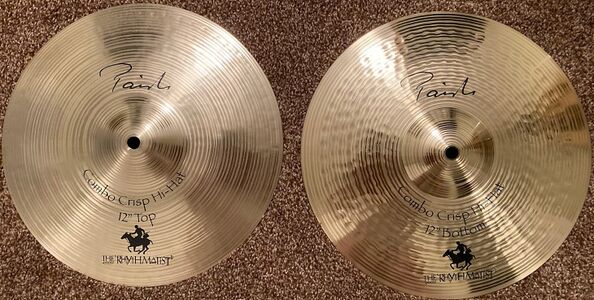
| − | + | * [[Paiste Signature 12" Combo Crisp Hi-Hat|Signature 12" Combo Crisp Hi-Hat]] features black "The Rhythmatist" logo in the 06:00 position under the cymbal type label. Developed in cooperation with [[Stewart Copeland]]<br> | |
| − | <gallery> | + | * [[Paiste Signature 20" Duo Ride|Signature 20" Duo Ride]] features a black "Vir2osity" logo at the 6 O'clock position. Developed in cooperation with [[Paiste Carl Palmer#Carl Palmer|Carl Palmer]]<br> |
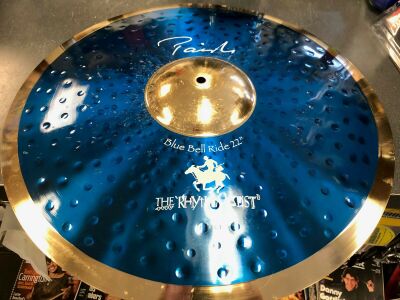
| − | File:18 joe morello 2.jpg|Joe Morello | + | * [[Paiste Signature 22" Blue Bell Ride|Signature 22" Blue Bell Ride]] features white "The Rhythmatist" logo in the 06:00 position under the cymbal type label. Developed in cooperation with [[Stewart Copeland]]<br> |
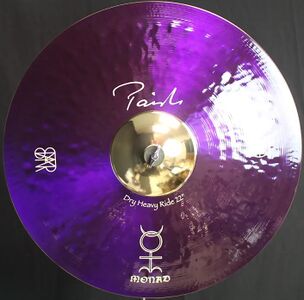
| − | File:14 joe morello 3.jpg|Joe Morello | + | * [[Paiste Signature 22" Dry Heavy Ride "Monad"|Signature 22" Dry Heavy Ride "Monad"]] in purple ColorSound features white "Monad" logos at 6 and 9 O'clock positions. Developed in cooperation with [[Paiste Danny Carey#Danny Carey|Danny Carey]]<br> |
| − | File: | + | ==== [[Paiste Signature#Signature Reflector|Signature Reflector]] ==== |
| − | + | * [[Paiste Signature Reflector 22" Bell Ride|Signature Reflector 22" Bell Ride]] has "Powerslave" written in Iron Maiden font together with Eddie stencil in 06:00 position under the cymbal type label. Developed in cooperation with [[Paiste Nicko McBrain|Nicko McBrain]]<br> | |
| + | ==== [[Paiste 2002#2002|2002]] ==== | ||
| + | * [[Paiste 2002 18" Giga Bell Ride|2002 18" Giga Bell Ride]] features white "psychotopus" logo above the cymbal type/size label. Developed in cooperation with [[Aquiles Priester]]<br> | ||
| + | * [[Paiste 2002 24" Big Ride|2002 24" Big Ride]] features red "Reverend Al's BIG RIDE" logo above the cymbal size label. Developed in cooperation with [[Paiste Alex Van Halen#Alex Van Halen|Alex Van Halen]]<br> | ||
| + | * [[Paiste 2002 24" Swish Ride|2002 24" Swish Ride]] features a red "Signature Groove" logo at the 3 O'clock position. Developed in cooperation with [[John "JR" Robinson#Paiste|John "JR" Robinson]]<br> | ||
| + | ==== [[Paiste Twenty#Masters|Masters]] ==== | ||
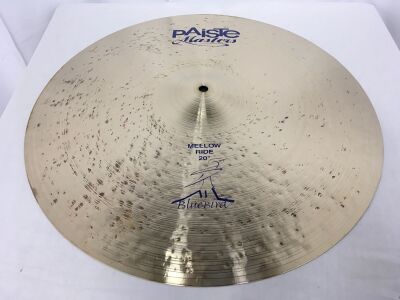
| + | * [[Paiste Twenty Masters Collection 20" Sweet Ride|Twenty Masters Collection 20" Sweet Ride]] / [[Paiste Masters 20" Mellow Ride|Masters 20" Mellow Ride]] features a blue "Blue Bird" logo at the 6 O'clock position below the type/size logo. Developed in cooperation with [[Paiste André "Dédé" Ceccarelli#André "Dédé" Ceccarelli|André "Dédé" Ceccarelli]]<br> | ||
| + | * [[Paiste Twenty Masters Collection 22" Crisp Ride|Twenty Masters Collection 22" Crisp Ride]] features a black "Rosie" logo at the 6 O'clock position below the type/size logo. Developed in cooperation with [[Paiste Leon Ndugu Chancler#Leon Ndugu Chancler|Leon Ndugu Chancler]]<br> | ||
| + | * [[Paiste Twenty Masters Collection 24" Deep Ride|Twenty Masters Collection 24" Deep Ride]] features a black "Signature Groove" logo at the 6 O'clock position. Developed in cooperation with [[John "JR" Robinson#Paiste|John "JR" Robinson]]<br><br> | ||
| + | <gallery heights="200" caption="Artist Model Stamps" mode="packed"> | ||
| + | File:Black Alpha Family.jpg|Black Alpha | ||
| + | File:18 joe morello 2.jpg|Formula 602 "Joe Morello" Script | ||
| + | File:14 joe morello 3.jpg|Formula 602 "Joe Morello" Stamp | ||
| + | File:RUDE 22 Power Ride The Reign 1.jpg|RUDE 22" Power Ride "The Reign" | ||
File:RUDEMEGPR-24-large.jpg|RUDE 24" Mega Power Ride | File:RUDEMEGPR-24-large.jpg|RUDE 24" Mega Power Ride | ||
| − | File: | + | File:Signature 12 Combo Crisp Hi Hat 1.jpg|Signature 12" Combo Crisp Hi-Hat |
| − | File:Paiste Signature Reflector 22 Bell Ride 1.jpg|Signature Reflector 22 Bell Ride | + | File:Signature 20 Duo Ride 1.jpg|Signature 20" Duo Ride |
| − | File:Paiste Signature 22 Blue Bell Ride 1.jpg|Blue | + | File:Paiste Signature Reflector 22 Bell Ride 1.jpg|Signature Reflector 22" Bell Ride |
| − | File:Paiste 2002 24 Big Ride 1.jpg| | + | File:Paiste Signature 22 Blue Bell Ride 1.jpg|Signature 22" Blue Bell Ride |
| + | File:Paiste Signature 22 Dry Heavy Ride Monad A.jpg|Signature 22" Dry Heavy Ride "Monad" | ||
| + | File:Paiste Twenty Masters 20 Sweet Ride 1.jpg|Twenty Masters Collection 20" Sweet Ride | ||
| + | File:Paiste Twenty Masters 20 Mellow Ride 4.jpg|Masters 20" Mellow Ride | ||
| + | File:Paiste Twenty Masters 22 Crisp Ride 1.jpg|Twenty Masters Collection 22" Crisp Ride | ||
| + | File:Paiste Twenty Masters 24 Deep Ride 1.jpg|Twenty Masters Collection 24" Deep Ride | ||
| + | File:18 gigabell.jpg|2002 18" Giga Bell Ride | ||
| + | File:Paiste 2002 24 Big Ride 1.jpg|2002 24" Big Ride | ||
| + | File:24 2002 swish ride top.jpg|2002 24" Swish Ride | ||
</gallery> | </gallery> | ||
| − | |||
== Lathing == | == Lathing == | ||
In the absence of embossed or stamped logos, cymbal identification can be performed by evaluating the lathing. Many series have very distinct lathing.<br> | In the absence of embossed or stamped logos, cymbal identification can be performed by evaluating the lathing. Many series have very distinct lathing.<br> | ||
| − | For example, RUDES are known for not being lathed at all (with the exception of the 24" Mega Power Ride, and Innovations have the "Sound Texture" lathing that looks as if the lathing tool was allowed to skip across the surface.<br> | + | For example, RUDES are known for not being lathed at all (with the exception of the 24" Mega Power Ride, and Innovations have the "Sound Texture" lathing that looks as if the lathing tool was allowed to skip across the surface.<br><br> |
| − | |||
Spotting details include: | Spotting details include: | ||
| − | <gallery> | + | <gallery heights="200" caption="Paiste Lathing Styles" mode="packed"> |
File:PXL 20211102 033023719.jpg|2002 and 602 side by side, lathing and color of alloy differences can be clearly seen. | File:PXL 20211102 033023719.jpg|2002 and 602 side by side, lathing and color of alloy differences can be clearly seen. | ||
File:242501439 580785103074775 4576886780728784338 n.jpg|2002's have two layers of lathing: fine lathing with uneven spaced coarse lathing over it | File:242501439 580785103074775 4576886780728784338 n.jpg|2002's have two layers of lathing: fine lathing with uneven spaced coarse lathing over it | ||
| Line 261: | Line 264: | ||
File:18 med 404.jpg|404's have very consistent tightly packed moderate lathing, not as deep as the lathing on 602's | File:18 med 404.jpg|404's have very consistent tightly packed moderate lathing, not as deep as the lathing on 602's | ||
</gallery> | </gallery> | ||
| − | + | == 1992: Revival of the black labels and Mr. Paolo Sburlati== | |
| − | == | + | (Paolo Sburlati worked many years for Paiste in Italy, he ended up distributing Paiste cymbals in Italy from 1984 to 1987, at that point, Toomas decided to switch to a larger distributor (Aramini) and moved Paolo over to a promoter/endorser for Paiste.)<br> |
| − | In | + | Paolo Sburlati: <i>"In 1992 Ian Paice gave me an old Ludwig drum set that he had used with Deep Purple and Whitesnake. Since it was from 1975, I wanted to match it with 2oo2 cymbals from the same era, the ones with the hand stamped black ink lettering.<br> |
| − | + | I asked Toomas Paiste if it was possible to have a set of 2oo2’s stamped with the old ink stamps. Toomas immediately liked the idea of the 70’s Ludwig/Paiste pairing, unfortunately, the old ink stamps were on a stamp holder at the home of his brother Robert who was not entirely in agreement on this "revival" plan.<br> | |
| − | + | So, one evening after Toomas visited his brother (who lived next to the factory in Nottwil), he took the stamp holder with the stamps from his house to the office!<br> | |
| − | + | The next day he had the set of 2oo2’s that I had ordered for the occasion were hand stamped with the old labels. There were about forty cymbals in total made, they were to be used with other vintage Ludwig drum sets that I had in my collection."</i><br> | |
| − | + | Subsequently, to celebrate the 2oo2 line in the year “2002”, Toomas decided to once again stamp new 2002’s with the old ink stamping, these were special order versions with a cost increase of 30%.<br> | |
| + | We understand that with these versions made in the year 2002, Paiste used the current technique and machines to label the cymbals, this is evident by the very sharp and clean edges of the ink labels compared to ragged and inconsistent labels of the original hand stamps.<br> | ||
| + | There may be others out there identifiable from the 1992 serial numbers.<br> | ||
| + | <gallery> | ||
| + | File:Paolo sburlati.jpg|Paolo is listed in the profiles III book | ||
| + | File:HandStamps.jpg|original hand stamps | ||
| + | File:1992 20 2002 ride orginal stamp 0.jpg|20" ride made for Paolo Sburlati | ||
| + | File:1992 20 2002 ride orginal stamp 3.jpg| | ||
| + | File:1992 20 2002 ride orginal stamp.jpg| | ||
| + | File:1992 20 2002 ride orginal stamp 1.jpg|1992 serial number | ||
| + | File:1992 20 2002 ride orginal stamp 2.jpg|note that "swiss made" was added to the bottom of the cymbal. | ||
| + | File:1992 20 2002 ride orginal stamp 4.jpg| | ||
| + | File:2002 nov mod drummer.jpg| Year 2002 black label promo with "modern" black ink labels | ||
| + | File:Refurbed 2002 1.jpg|2002 labeled with a "modern" stamp, note how clean the printing is compared to the original hand stamp | ||
| + | </gallery> | ||
==Factory refinishing== | ==Factory refinishing== | ||
| Line 293: | Line 310: | ||
D-24790 Schacht-Audorf"</i><br> | D-24790 Schacht-Audorf"</i><br> | ||
<gallery> | <gallery> | ||
| − | File:2002 15 se top before.jpg|15" | + | File:2002 15 se top before.jpg|15" Sound Edge top before |
| − | File:2002 15 se top after.jpg|15" | + | File:2002 15 se top after.jpg|15" Sound Edge top after |
File:2002 15 se top after 2.jpg|Closeup | File:2002 15 se top after 2.jpg|Closeup | ||
| − | File:2002 15 se bottom before.jpg|15" | + | File:2002 15 se bottom before.jpg|15" Sound Edge bottom before |
| − | File:2002 15 se bottom after.jpg|15" | + | File:2002 15 se bottom after.jpg|15" Sound Edge bottom after |
File:Refurbed 2002 1.jpg|German 2002 from about 1976 based on serial number | File:Refurbed 2002 1.jpg|German 2002 from about 1976 based on serial number | ||
| − | |||
File:Refurbed 2002 2.jpg|bottom logo shows the post 2005 "made in Switzerland" | File:Refurbed 2002 2.jpg|bottom logo shows the post 2005 "made in Switzerland" | ||
| + | File:Paiste 2002 14 Medium Hi-Hat blk.jpg| | ||
| + | File:Mq9cduqmioderx5v4ng5.jpg|notice the black ink instead of standard 602 blue ink (stamped over the outline emboss/stamp) | ||
| + | File:Restamped 602 dark ride.jpg| this was common for cymbals refinished in the 90's because Paiste was no longer using blue ink for any of it's labels | ||
| + | </gallery> | ||
| + | |||
| + | == Early 70's 602 engraving dates == | ||
| + | We know from two different sources at Paiste (one was Erik Paiste) that these may represent cymbals which were returned to have some rework done on them.<br> | ||
| + | They most likely date the modification and not the actual cymbal manufacture date. Currently we have records for two dozen of these 602s:<br> | ||
| + | |||
| + | *1-72: 3 (one with R - 1 - 72 but in the same style)<br> | ||
| + | *2-72: 2<br> | ||
| + | *3-72: 5 (one pair of 15" SE hats with outline stamp and the older style patent list)<br> | ||
| + | *4-72: 6<br> | ||
| + | *5-72: none so far<br> | ||
| + | *6-72: 3<br> | ||
| + | *2-73: 3 (pair of 1972 serial number hats plus a preserial 20" Ride)**<br> | ||
| + | *3-73: 1 (14" SE hat bottom preserial) This preserial tells us that the time lag before a cymbal is returned for rework might be a year or two.<br> | ||
| + | *And last but not least there is one Giant Beat which has 7 or 9 - 72<br> | ||
| + | |||
| + | (**)The above pair of hi-hats is a rework from Paiste: The engraving is "2-73" and the serial numbers are 226602 and 226603, the hats were 12 3/4" diameter and this is what Paiste customer services had to say: “<i>this hi-hat indeed is from 1972, In former times hi-hat pairs were matched and the serial number was embossed afterwards. The engraving inside the bell “2-73” means, that something was changed or repaired on customer’s request in February 1973 by our craftsmen. The 12 ¾” size is indeed remarkable. It is possible, that the customer damaged the edge, and our craftsmen trimmed the edge at the factory in February 1973 with the result being a smaller sized hi-hat</i>.”<br><br> | ||
| + | |||
| + | <gallery> | ||
| + | File:F602-3-72-15SE-engraved.jpg|3-72 engraving date | ||
| + | File:602SE-bot 6-72.jpg|6-72 engraving date | ||
| + | File:602SE-bot3-73.jpg|3-73 engraving date "KPAC" | ||
| + | File:13-2-73-hats-engr.jpg|(**)02-73 engraving date | ||
| + | File:13-2-73-hats-bot.jpg|(**)2-73 cut down to 12 3/4" | ||
| + | </gallery> | ||
| + | |||
| + | ==Variations of the patent stamp on Sound Edge Hi-Hats, Flat rides== | ||
| + | Through the early years of sound edge hi hats, the number of patents by country increased for zero to six:<br> | ||
| + | |||
| + | * "Pat. Pending" only from 1967 until at least July 1969 (after that the ink changes to show the US patent.)<br> | ||
| + | |||
| + | * Patent numbers from 4 countries on stamp (Swiss, Great Britain, Italy, USA) ~1970 (possibly as early as July 1969 but no sooner due to the inclusion of US patent number)<br> | ||
| + | |||
| + | * Patent numbers from 6 countries on stamp (adds Germany and USSR) ~1972 (It is possible it could date as far back as 4/1970 as that's when the German patent number was granted.)<br> | ||
| + | |||
| + | * Removal of "other countries pending" by 1976 at the latest.<br> | ||
| + | |||
| + | *There is the possibility that the earliest 602 SE Hats were stamped with a simple Sound Edge Top (and Bottom) in a plain font in red ink at 3:00 O'Clock (like all other 602s) before they came up with the black wavy SE Logo stamp. | ||
| + | *We have an old advert with this alternate stamping, we were told by Ed Clift that this plain text stamping was just done for the ad and that all production SE Hats had the wavy black logo, but it wouldn't be surprising if some were sold with the plain red ink.<br><br> | ||
| + | |||
| + | <gallery> | ||
| + | File:PXL 20221123 021143208.jpg|"Pat. Pending" only, '67 to pre July '69 | ||
| + | File:602 Patent stamp 4 country.jpg|Approx 1970 preserial 602 sound edge showing Patent numbers from 4 countries & "other countries pending" | ||
| + | File:Sisme 602 6 patents.jpg|'73 602 Sound Edge showing Patent numbers from 6 countries & "other countries pending" | ||
| + | File:79 602 SE patent list.jpg|'79 602 Sound Edge showing Patent numbers from 6 countries and lack of "other countries pending" | ||
| + | File:Flat ride pat pend.jpg|Early Flat Ride "pat pend" pre Dec. '70 | ||
| + | File:Flat ride other pat pend.jpg|"Other countries pending" approx. post 1971 | ||
| + | File:602-Flat-Ride patent.jpg|"Other countries pending" removed, last iteration stamp | ||
| + | </gallery> | ||
| + | |||
| + | == Patent lists and Pat Pending years:== | ||
| + | |||
| + | The timeline on the Paiste site says 1967/68 for Flat Rides and Sound Edge hats. The details on the U.S. patent & trade mark office site says:<br> | ||
| + | *Paiste Flat Ride: United States Patent 3,546,994 Filed Jan 22, 1969 and Issue Date: December 15, 1970 | ||
| + | *Paiste Sound Edge Hats: United States Patent 3,453,923 Filed Aug 3, 1967 and Issue Date: July 8, 1969 | ||
| + | *Given Paiste themselves say "invented 1967/1968", they were likely patented in Switzerland and England earlier than in the USA.<br><br> | ||
| + | |||
| + | <gallery> | ||
| + | File:Sound edge eng patent.jpg|Oct. 1967 English patent application | ||
| + | File:Sound edge eng patent 2.jpg|English patent application | ||
| + | File:Sound edge eng patent 3.jpg|English patent application | ||
| + | File:Sound edge eng patent 4.jpg|English patent application | ||
| + | File:US flat ride patent 1970.jpg|US Flat Ride patent 1970 | ||
| + | </gallery> | ||
| + | |||
| + | == Early high "ripple count" sound edge bottoms== | ||
| + | Another identifying factor of early preserial 602 sound edge bottoms is they had a higher "ripple count" than later versions, it seems Paiste had not decided on a standard number when Sound Edges were first introduced.<br> | ||
| + | |||
| + | *There are even numbers of ripples. They started out at 56 or 54 in the "Pat Pending" era (mid 1967 - mid 1969), reduced to 52 once production settled down, reduced to around 36-42 by 1972 (serial number black label era), and 32 by the blue label era and into the present day reissues (needs to be verified).<br> | ||
| + | *There are cymbals with other ripple numbers (46 x 1, 38 x 1) which might represent the handmade factor, or be intermediate forms in time. We don't have enough examples to get that precise.<br> | ||
| + | |||
| + | ===Sound Edge ripple reductions (scallops) tabulation as at 10-Oct-21=== | ||
| + | |||
| + | 56 14" preserial x 3<br> | ||
| + | 54 15" pat pending; 15" black<br> | ||
| + | 52 14" preserial x 7<br> | ||
| + | 51 15" with 51 reputed (probably miscount by 1)<br> | ||
| + | 50 15" preserial; 14" preserial<br> | ||
| + | 46 14" preserial<br> | ||
| + | 42 14" black label; 14" preserial, 1972 13"<br> | ||
| + | 38 14" black label<br> | ||
| + | 36 14" black label x 3<br> | ||
| + | 32 14" blue label; 14" present day<br> | ||
| + | |||
| + | <gallery> | ||
| + | File:Preserial 602 14 SE hats hi ripples.jpg | ||
| + | File:Pre serial 602 SE hi rippple.jpg | ||
| + | File:602 x SE bottom x.jpg| 46 ripples | ||
| + | File:PXL 20221115 025429649.jpg| top and bottom | ||
| + | File:PXL 20221115 025401582.jpg | ||
| + | File:14-850-1050-bot.jpg | ||
| + | File:14-935-bot.jpg | ||
| + | File:14-do-ripple-count.jpg | ||
| + | File:15-1038-1171-bots.jpg | ||
| + | File:15-1090-1245-tops.jpg | ||
| + | </gallery> | ||
| + | == U.S. distributors before 1965 == | ||
| + | DynaStar Formula 602s were sold in the USA by Halifax Distribution from 1962 to early 1965 prior to Ludwig taking over exclusive North American distribution later in '65. | ||
| + | Prior to Ludwig's exclusive deal with Paiste in ~1965 it looks like Bonne Music Center in Syracuse, NY was one of "the" places to get a Formula 602 in the early 1960s (printed material exists to confirm a 1962 start date of Dynastar F602).<br> | ||
| + | The cymbals even got an alternate emboss logo with the Dynastar name. Why the Dynastar name? That remains unclear. Around this time, the store also started importing a lot of other instruments from overseas, so maybe they tied them all together under the Dynastar brand name.<br> | ||
| + | As an aside: Dynastar/Halifax also briefly sold the Paiste Dixie and budget SUPER for a short time in 1964/5 before those lines were removed from the market due to the Ludwig deal. Why didn't Halifax carry the Stambul? Because it was already being sold in the USA as the Ludwig Paiste (3-star logo). | ||
| + | <gallery> | ||
| + | File:PXL 20230629 034316842.jpg | ||
| + | File:Dynastar 602 logo.jpg | ||
| + | File:Dynastar 602 logo2.jpg | ||
| + | File:Dynastar 602.jpg | ||
| + | File:PXL 20230730 050148353.jpg| 18" 602 Dynastar medium | ||
| + | File:PXL 20230730 050840961.jpg| 18" 602 Dynastar medium | ||
| + | File:PXL 20230731 031457023.jpg| Dynastar (left), E over trade (right) | ||
| + | File:381273923 6664010480348681 770360275072042069 n.jpg | ||
| + | </gallery> | ||
| + | <gallery> | ||
| + | File:Dynastar flyer.jpg|Bonne Music/Halifax Distributing of Syracuse, NY | ||
| + | File:Bonne music.jpg|Bonne Music/Halifax Distributing of Syracuse, NY | ||
| + | File:1963 (Aug) Dynastar Paiste Buddy Rich ad.JPG|August 1963 Buddy Rich Down Beat magazine advert | ||
| + | File:Buddy rich.JPG| Color fyler of same Buddy Rich advert | ||
| + | File:1963 (Dec) Dynastar Paiste ad William Street.JPG|December 1963 William Street Down Beat magazine advert | ||
| + | File:1964 (Jan) Dynastar Paiste ad John Rae.JPG|Jan 1963 John Rae Down Beat magazine advert | ||
| + | File:1964 (Mar) Dynastar Paiste ad Eddie Locke.JPG|March 1963 Eddie Locke Down Beat magazine advert | ||
| + | File:1964 (Mar) Dynastar Paiste ad four drummers.JPG|March 1963 Down Beat magazine advert | ||
| + | File:1964 (Sept) Dynastar Paiste ad Jake Hanna.JPG|Sept 1964 Jake Hanna Down Beat magazine advert | ||
</gallery> | </gallery> | ||
== European, English & Japanese distributors == | == European, English & Japanese distributors == | ||
Collectors may run across odd looking logos from vintage Paistes during their online searches, below is some background detail and history on what one might find:<br> | Collectors may run across odd looking logos from vintage Paistes during their online searches, below is some background detail and history on what one might find:<br> | ||
| − | + | ===England:=== | |
| − | === Arbiter | + | === Arbiter === |
"Arbiter Ltd." and "Dallas–Arbiter" were the UK importers and distributors for Paiste. [https://en.wikipedia.org/wiki/Ivor_Arbiter <b>Ivor Arbiter wikipedia</b>]<br> | "Arbiter Ltd." and "Dallas–Arbiter" were the UK importers and distributors for Paiste. [https://en.wikipedia.org/wiki/Ivor_Arbiter <b>Ivor Arbiter wikipedia</b>]<br> | ||
Ivor Arbiter was a British-American drum designer, manufacturer, instrument salesman, and entrepreneur. In his early career, he was the owner and operator of a specialty drum shop in the West End of London.<br> | Ivor Arbiter was a British-American drum designer, manufacturer, instrument salesman, and entrepreneur. In his early career, he was the owner and operator of a specialty drum shop in the West End of London.<br> | ||
| Line 312: | Line 452: | ||
These were sold until as late as 1968. By 1969, Arbiter started carrying standard Paiste branded product lines except for the Zilkets which were sold until the early 1970s.<br> | These were sold until as late as 1968. By 1969, Arbiter started carrying standard Paiste branded product lines except for the Zilkets which were sold until the early 1970s.<br> | ||
<gallery> | <gallery> | ||
| − | File: | + | File:PXL 20230115 075353178.jpg|Arbiter Custom Formula 602 logo. This cymbal is probably from the mid 1960s. Charlie Watts used a 16" Arbiter Custom Formula 602 for many years before it cracked. |
File:Arbiter custom.jpg|Arbiter Custom pricing and available sizes indicate the "Custom" might been a Stambul with a different emboss. | File:Arbiter custom.jpg|Arbiter Custom pricing and available sizes indicate the "Custom" might been a Stambul with a different emboss. | ||
File:Arbiter zilco.jpg|Arbiter Zilko | File:Arbiter zilco.jpg|Arbiter Zilko | ||
File:Arbiter zilket.jpg|Arbiter Zilket | File:Arbiter zilket.jpg|Arbiter Zilket | ||
| − | File: | + | File:PXL 20230115 015037812.jpg|Arbiter "Custom" Formula 602 |
File:Dallas Arbiter 1971-72 5.jpg|'71/'72 Dallas-Arbiter catalog | File:Dallas Arbiter 1971-72 5.jpg|'71/'72 Dallas-Arbiter catalog | ||
File:Paiste arbiter 68 1.jpg|1968 Arbiter Ltd. catalog | File:Paiste arbiter 68 1.jpg|1968 Arbiter Ltd. catalog | ||
File:Paiste arbiter 68 price list.jpg|1968 Arbiter Ltd. price list for 602's | File:Paiste arbiter 68 price list.jpg|1968 Arbiter Ltd. price list for 602's | ||
File:1964 arbiter ad.jpg|1964 Arbiter advert | File:1964 arbiter ad.jpg|1964 Arbiter advert | ||
| − | |||
</gallery> | </gallery> | ||
| − | + | <gallery> | |
| − | ===Hayman standard cymbals | + | File:Arbiter 1.jpg|1971/72 Arbiter catalog |
| − | + | File:Arbiter 2.jpg | |
| − | + | File:Arbiter 3.jpg | |
| + | File:Arbiter 4.jpg | ||
| + | File:Arbiter 5.jpg | ||
| + | File:Arbiter 6.jpg | ||
| + | File:Arbiter 7.jpg | ||
| + | File:Arbiter 8.jpg | ||
| + | </gallery> | ||
| + | ===Hayman standard cymbals=== | ||
Hayman was a UK-based drum brand that was produced from 1968 - 1975.<br> | Hayman was a UK-based drum brand that was produced from 1968 - 1975.<br> | ||
Hayman drums and cymbals were the brainchild of Ivor Arbiter: "<i>The Hayman Standard is a cymbal with the Hayman name made by the Paiste Cymbal Company in Switzerland. These fine cymbals will more than meet the requirements of the drummer who is not yet ready to purchase a top of the line cymbal</i>". (from early-mid 70s Dallas-Arbiter catalog). These B8 Paiste-made cymbals are a bit on the rare side. <br> | Hayman drums and cymbals were the brainchild of Ivor Arbiter: "<i>The Hayman Standard is a cymbal with the Hayman name made by the Paiste Cymbal Company in Switzerland. These fine cymbals will more than meet the requirements of the drummer who is not yet ready to purchase a top of the line cymbal</i>". (from early-mid 70s Dallas-Arbiter catalog). These B8 Paiste-made cymbals are a bit on the rare side. <br> | ||
| − | Our guess is that Paiste made these cymbals for just a few years, most likely from | + | Our guess is that Paiste made these cymbals for just a few years, most likely from 1972 to 1975 as Dallas-Arbiter carried standard Paiste product lines up until at least 1971/72. The Dallas-Arbiter catalog is unclear on how these cymbals were typed, listing them as hi hats and medium rides, which doesn't make much sense given the available sizes. One cymbal we found, from what's left of the ink that it was designated as a Medium Thin, that suggests these cymbals were relabeled Dixies with a Hayman emboss. |
| − | The Dallas-Arbiter catalog is unclear on how these cymbals were typed, listing them as hi hats and medium rides, which doesn't make much sense given the available sizes. | + | Also the lathing style also matches the Dixies from that era. [https://en.wikipedia.org/wiki/Hayman_drum Wikipedia: Hayman drums]<br> |
| − | One cymbal | + | There is alo the "Phase" and "Phase 1" series which could've been relabeled supers or Dixies, no weight designation that we have seen so far. |
| − | [https://en.wikipedia.org/wiki/Hayman_drum Wikipedia: Hayman drums]<br> | ||
'''Available sizes:'''<br> | '''Available sizes:'''<br> | ||
Hi Hats: 14", 15"<br> | Hi Hats: 14", 15"<br> | ||
Cymbals were available in: 16", 18", 20", 22"<br> | Cymbals were available in: 16", 18", 20", 22"<br> | ||
| − | |||
It's quite possible they were available in these two weights:<br> | It's quite possible they were available in these two weights:<br> | ||
Medium Thin: 16", 18", 20", 22"<br> | Medium Thin: 16", 18", 20", 22"<br> | ||
Crash Ride: 16", 18", 20", 22"<br> | Crash Ride: 16", 18", 20", 22"<br> | ||
<gallery> | <gallery> | ||
| − | File:Hayman stamp.jpg|Hayman | + | File:Hayman stamp.jpg|Hayman standard |
| − | File:Hayman arbiter catalog.jpg|Hayman | + | File:Hayman Phase logo.jpg| Hayman Phase |
| + | File:Hayman phase 1.jpg| Hayman Phase 1 | ||
| + | File:Hayman arbiter catalog.jpg|Hayman Arbiter catalog | ||
| + | File:Hayman Standard.JPG|Dallas Arbiter catalog from Dec 1972 | ||
File:20 hayman 1.jpg|20" | File:20 hayman 1.jpg|20" | ||
File:22 hayman.jpg|22" | File:22 hayman.jpg|22" | ||
File:14 hayman.jpg|14" hi-hat | File:14 hayman.jpg|14" hi-hat | ||
File:Hayman hats.jpg|Pair 14" hi-hat | File:Hayman hats.jpg|Pair 14" hi-hat | ||
| + | File:Phase 1 ride.jpg|Phase 1 ride | ||
</gallery> | </gallery> | ||
| − | === | + | ===Germany:=== |
| − | + | ===Sonor drum co.=== | |
| − | + | Sonor sold Paiste Stambuls in their catalogs with a special Sonor logo stamped below the regular Stambul stamp. Paistes are listed in the Sonor catalogs from 1952 to about 1958. We cannot find any evidence that Sonor had a relationship with Paiste prewar, but investigations are ongoing! | |
<gallery> | <gallery> | ||
| − | File:SC sisme dist.jpg|Sound creation logo with SISME "high performance" | + | File:52 sonor catalog.jpg|1952 catalog |
| + | File:52 sonor catalog marching china.jpg|1952 catalog | ||
| + | File:53 sonor catalog.jpg|1953 catalog | ||
| + | File:57 58 sonor catalog gongs.jpg|1957/8 catalog | ||
| + | File:57 58 sonor catalog pricelist.jpg|1957/8 catalog | ||
| + | File:57 58 sonor catalog.jpg|1957/8 catalog | ||
| + | File:Early 50s sonor wide stamp.jpg|early 50's stamp with old Sonor "delta" logo | ||
| + | File:Early 50s wide stamp.jpg|early 50's stamp with old Sonor "delta" logo | ||
| + | File:Stambul HH NS12 15 inch with Sonor Logo t1169g b1224g 2.jpg|Sonor "script" logo | ||
| + | File:Stambul HH NS12 15 inch with Sonor Logo t1169g b1224g.jpg|Sonor "script" logo | ||
| + | File:S-l1600 (1).jpg|Sonor "script" logo | ||
| + | </gallery> | ||
| + | ===Trixon drums=== | ||
| + | Trixon was another German drum company like Sonor, the cymbals listed are Stambuls with an alternate logo stamp. | ||
| + | <gallery> | ||
| + | File:Paiste trixon.jpg | ||
| + | File:Stambul Trixon 50's emboss.jpg | ||
| + | File:Trixton.jpg | ||
| + | File:Trixon stambul.JPG | ||
| + | </gallery> | ||
| + | ===Tromsa drums=== | ||
| + | <gallery> | ||
| + | File:Tromsa 1959 Stambul cymbals.JPG | ||
| + | File:Tromsa 1959 Stambul hats.JPG | ||
| + | File:Tromsa circa 1960 Stambul.JPG | ||
| + | </gallery> | ||
| + | ===Deri drums=== | ||
| + | <gallery> | ||
| + | File:Deri drums price list.jpg | ||
| + | File:Deri Stambuls.jpg | ||
| + | </gallery> | ||
| + | ===Luxor=== | ||
| + | Luxor drums may have been made in Japan and perhaps sold in Germany... | ||
| + | <gallery> | ||
| + | File:1960s Luxor catalog.JPG | ||
| + | </gallery> | ||
| + | ===France: Asaba=== | ||
| + | <gallery> | ||
| + | File:11.jpg | ||
| + | </gallery> | ||
| + | |||
| + | === Italy: SISME === | ||
| + | SISME were the Italian importers and distributors for Paiste from the early 1970's (there are preserial and "transition" cymbals from approx 1970/71 that have the SISME stamp on them) until about 1984 when "Paiste Italia" took over.<br> | ||
| + | Paiste had been distributed in Italy in the ‘60s and early ‘70s by Hans Bauer as "Casale-Bauer distributing".<br> | ||
| + | SISME started distributing probably around 1970, while Casale-Bauer was still distributing at the same time, in order for SISME to distinguish their cymbals from Casale-Bauer, Paiste added "Hi performance" (a favorite phrase of Roberts), in addition, Aldo, the owner of SISME also asked Toomas to add the red "Sisme distribution" ink stamp on the bottom of the cymbals. SISME's distribution ended in 1984 when Paolo Sburlati and "Paiste Italia" replaced them.<br> | ||
| + | <gallery> | ||
| + | File:SC sisme dist.jpg|Sound creation logo with SISME "high performance" | ||
| + | File:Sisme preserial.jpg | ||
File:602 22 thin.jpg| Preserial 602 thin with "high performance" stamp | File:602 22 thin.jpg| Preserial 602 thin with "high performance" stamp | ||
| − | File:Sisme 602.jpg|"high performance" stamp | + | File:Sisme 602.jpg|602 "high performance" stamp |
| − | File:Dixie sisme.jpg|"high performance" stamp | + | File:Dixie sisme.jpg|Dixie "high performance" stamp |
| − | File:Sisme 602 a.jpg|602 sound edge with "SISME distribution" stamped in red | + | File:Sisme 602 a.jpg|602 sound edge with "SISME distribution" stamped in red |
| + | File:352857894 1192480698110532 925554959473973155 n.jpg|2002 "high performance" emboss | ||
| + | File:352693214 1436566650446372 6772346614988823868 n.jpg|SISME 2002 | ||
| + | File:352494821 256848153690577 2162341193883767064 n.jpg|SISME 2002 bottom | ||
| + | File:351698210 224688143672667 2658024535120384503 n.jpg|2002 "SISME distribution" stamped in red | ||
</gallery> | </gallery> | ||
| − | + | ===Japan: Pearl === | |
| − | ===Pearl | ||
There was a time when Pearl distributed Paiste in Japan. From research that time period seems to run from 1969 to 1979.<br> | There was a time when Pearl distributed Paiste in Japan. From research that time period seems to run from 1969 to 1979.<br> | ||
Below is a page from a 1979 Pearl JDM catalog showing the selection of Sound Creation, Formula 602, 2002, and 404's.<br> | Below is a page from a 1979 Pearl JDM catalog showing the selection of Sound Creation, Formula 602, 2002, and 404's.<br> | ||
| Line 372: | Line 570: | ||
File:1976 pearl catalog.jpg|1976 JDM catalog | File:1976 pearl catalog.jpg|1976 JDM catalog | ||
File:Pearl 1979.jpg|1979 JDM catalog | File:Pearl 1979.jpg|1979 JDM catalog | ||
| − | |||
| − | |||
| − | |||
| − | |||
| − | |||
| − | |||
| − | |||
| − | |||
| − | |||
| − | |||
| − | |||
| − | |||
| − | |||
</gallery> | </gallery> | ||
| Line 391: | Line 576: | ||
File:602 hi fi bronce.jpg|602 "hifi bronce", bronce is Spanish for bronze, possibly a Spanish distributor? | File:602 hi fi bronce.jpg|602 "hifi bronce", bronce is Spanish for bronze, possibly a Spanish distributor? | ||
</gallery> | </gallery> | ||
| + | |||
| + | <big>''' [[Paiste Rarities, Oddballs, and Unique Items]]''': A photo gallery.</big> | ||
-------------------- | -------------------- | ||
| − | Sources: Paiste.com, Cymbal alloys - wikipedia, Todd Little, Steve Black, Dan Garza, Nils Lillig | + | Sources: Paiste.com, Cymbal alloys - wikipedia, Todd Little, Steve Black, Dan Garza, Nils Lillig.<br> |
Return to the '''[[Paiste Series|Paiste Series Portal]]<br> | Return to the '''[[Paiste Series|Paiste Series Portal]]<br> | ||
Return to the '''[[Paiste|Paiste Main Page]] | Return to the '''[[Paiste|Paiste Main Page]] | ||
Latest revision as of 04:24, 7 September 2025
Contents
- 1 Alloys
- 2 B20 "Bell bronze" Alloy
- 3 B15 "Signature" Alloy
- 4 B8 "Malleable bronze" (2002) Alloy
- 5 NS12 Nickel Silver - CuNi12Zn24 (CuNi12 for short)
- 6 MS63 Brass
- 7 Serial Numbers
- 8 Swiss and German factories
- 9 Series Logos/stamps/emboss
- 10 1981 transition to Ink Stamps
- 11 Size Stamps
- 12 Prototypes
- 13 Artist Model Stamps
- 14 Lathing
- 15 1992: Revival of the black labels and Mr. Paolo Sburlati
- 16 Factory refinishing
- 17 Early 70's 602 engraving dates
- 18 Variations of the patent stamp on Sound Edge Hi-Hats, Flat rides
- 19 Patent lists and Pat Pending years:
- 20 Early high "ripple count" sound edge bottoms
- 21 U.S. distributors before 1965
- 22 European, English & Japanese distributors
It is not uncommon for people to come across Paistes that are not completely identifiable. This includes vintage cymbals which the ink stamped logos and labels have been removed or faded.
More modern cymbals can be rendered ambiguous if cleaned improperly.
This page includes points used to identify cymbals that do not have proper labeling that has survived (more info is also available on the serial # page).
Please note that for this conversation, the term "embossed" refers to anything pressed into the metal of the cymbal, and the word "stamped" refers to any wording applied in ink.
In other arenas these terms may not be used in the same way.
Alloys
There are several alloys used in the production of Paiste cymbals.
The easiest way to determine the alloy of an unknown cymbal is visually. However, the color may be difficult to judge in digital photographs.
It is recommended that when trying to identify a cymbal that it be done in person. Comparing to a cymbal of a known alloy is helpful if one is not familiar with the hues of the different alloys.
The formulae noted below refers to the amount of tin is mixed in with the main ingredient copper so for example, the B8 formula would be 8% tin to 92% copper.
B20 "Bell bronze" Alloy
Bell bronze, also known as bell metal, is the traditional alloy used for fine cymbals:
- B20: 20% tin / 80% copper tends to have a silver/yellow or white/yellow color hue, it is more pale than either the B15 and B8 alloys.
- Bell bronze is a "two-phase" alloy: meaning some of the tin is not dissolved in the copper grains but exists between them.
- This makes the metal harder and more brittle than a single-phase alloy, it must be "hot rolled" (Hot rolling is a metalworking process that occurs above the recrystallization temperature of the material).
- It can be difficult to work with, requiring extensive reworking, tempering and annealing due to its natural brittle state, but it has been used longer than any other alloy (almost 400 years by Zildjian alone!).
- B20 is still the most commonly used form of bronze.
- The copper in the alloy will oxidize when exposed to excessive moisture.
Series that use this alloy: SUPER FORMULA 602, Formula 602, Sound Creation, Twenty, Twenty Custom Collection, and Twenty Masters Collection.
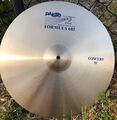
Formula 602
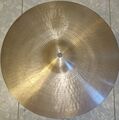
Super Formula 602
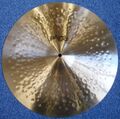
Sound creation
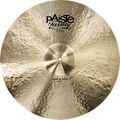
Twenty Masters
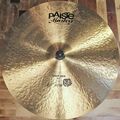
Masters
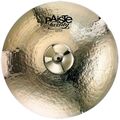
Twenty Custom
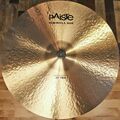
Formula 602 modern essentials


B15 "Signature" Alloy
Paiste "Sound Alloy": 15% tin / 85% copper, is the first bronze formula ever developed specifically for making cymbal sounds:
- In 1989 Paiste released this professional cymbal series bronze with 15% tin content.
- Though the manufacturing requires the metal to be hot rolled (like B20) at certain stages, it is not tempered like traditional B20 cymbals but is annealed: Annealing.
- Using this alloy allows for greater consistency between blanks compared to traditional cymbal alloy, and is more inline with Paiste's B8 production methods.
- B15, or Proprietary Signature Bronze (PSB) alloy, can be identified by lustrous yellow coloration.
- Like all bronze, a blue/green oxide will be found when exposed to excessive moisture. This cupric oxide is what gives the Statue of Liberty its characteristic color.
- In early promotional materials, Paiste referred to this alloy as "PSA" - Paiste Sound Alloy.
Series that use this alloy: Signature, Signature Dark Energy, Signature Traditionals, and Visions(certain models), Sound formula.
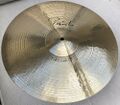
Signature

Signature Dark Energy
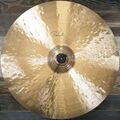
Signature Traditionals
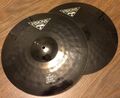
Visions
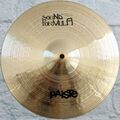
Sound formula


B8 "Malleable bronze" (2002) Alloy
Malleable bronze is an alloy of tin and copper comprising 8% tin / 92% copper:
- It is a "single-phase" alloy and can be cold rolled into sheets (Cold rolling occurs with the metal below its recrystallization temperature, usually at room temperature)
- Unlike B20 bell bronze, it is readily available as commercial sheet metal in many grades and thicknesses.
- Top of the line malleable bronze cymbals proved exceptionally suitable for the louder music, the best of them equal the best bell bronze cymbals in quality and sound characteristics.
- B8 has a noticeable orange hue to it, this is readily seen in clean cymbals, but is also present in cymbals that have developed a patina.
- One noticeable exception is the RUDE line: the color of a RUDE may have a green or brown tint but the lack of lathing and the raw color from the annealing process give them away.
- Moisture will cause B8 to develop a tell tale blue/green oxide.
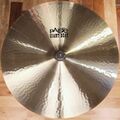
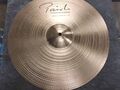
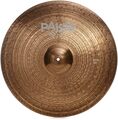
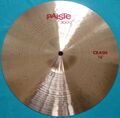
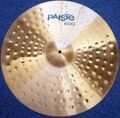
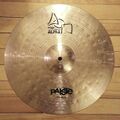
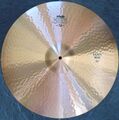
Series that use this alloy: 2002, Giant Beat, RUDE, Dimensions, Innovations, Alpha, 505, 404, Stambul 65, Stambul B8 (after 1970), Dixie B8 (after 1970), 3000, 2000, 1000 among many others.
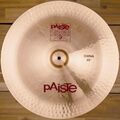
2002
Giant Beat

Rude
Dimensions
Innovations
900 series
3000

2000
1000
Alpha
505
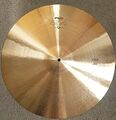
404
900 series marching/symphonic
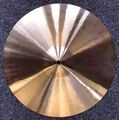
Stambul 65

Stambul

Dixie
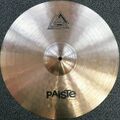
802
502
PST 8
Pst 7


NS12 Nickel Silver - CuNi12Zn24 (CuNi12 for short)
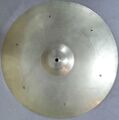
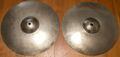
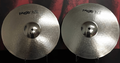
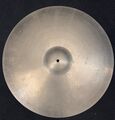
Composing roughly of 64% copper / 12% nickel / 24% zinc:
- Paiste's go to alloy from 1947 to 1970/71 for some of the top line and all its lower line cymbals.
- Nickel silver is malleable and available as commercial sheet metal, and gives a bright tone but without the shimmer and sensitivity of tin bronzes.
- In the early to mid 20th century nickel alloy cymbals were far more widely produced and used, and so many older recordings were probably made using cymbals with a significant nickel content.
- A very few specialised high-quality cymbals are also made from nickel silver, as are some top-quality gongs producing more modern and exotic sounds.
- Cymbals made of nickel silver have a steely silver color, this color tends to be more sterile looking then B20 alloy, resembling steel in many cases.
- Nickel silver is known for not corroding easily and may only have a light surface patina, rendering them more of a grey color.
- If exposed to moisture, they will not develop the blue/green oxide indicative of cupric alloys.
Series that use this alloy: Stambul (pre '71), Dixie (pre '71), Ludwig, Stanople, and Super, among others.
Zilko Standard
Arbiter Zilket
Standard Hi hats
402 nickel silver hi-hats

NS12 Stambul 20" ride
Ludwig Standard 22" ride
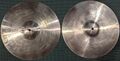
Ludwig Standard 13" hi hats
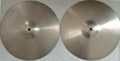
14" Stanople marching


MS63 Brass
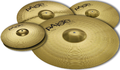
Brass is a copper/zinc alloy, most commonly in a 63% copper / 37% zinc ratio:
- It is very easily worked, readily available as sheet metal, and easily the cheapest metal stock normally used for cymbals.
- The tone of brass cymbals tends to be warm but dull compared to any sort of tin bronze.
- This alloy is almost exclusively found in beginner lines of instruments.
- If your store carries entry-level kits that come with complimentary cymbals, they’re likely to be brass.
- Used in some entry level Paiste cymbals.
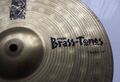
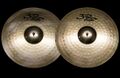
Series that use this alloy: Brass-Tones, 101 Brass, 200, 302
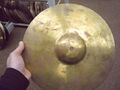
1940's Brass Zilko
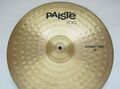
200
101
Brass Tones
302


Serial Numbers
Please see the special "serial number page" that examines these in detail.
Prototypes may or may not adhere to the serial number patterns in all respects.
Swiss and German factories

The German factory was the 1st, to start production around 1947/48, in 1957 Robert Paiste moved to Nottwil Switzerland by himself and setup the Swiss factory. The German factory is the sole producer of gongs, and has been since opening.
Both factories made both levels of product except the German factory didn't make B20 cymbals or Giant beats.
Many 2002's were made in 70s and 80s at the German factory and the German factory also "finished" a small number of 602s during the preserial days (** see below).
The German factory made practically all the vintage Paiste lines: 2002 (up to 1986), 2000, 1000, 400, 200, Stambul '65, Stambul, 404, 505, Ludwig cymbals, Dixies, Supers, Stanoples, Zilkos, etc.
They still make all the lower lines and "OEM" cymbals.
There is a notion among some that the Swiss 2002 versions are better quality... they are not, some German versions are usually a little heavier and a little darker sounding.
People are less familiar with German Paistes because the Swiss factory did most of the exporting, so the U.S. didn't get German 2002's or 404's or 505's.
The German Paistes were meant for the German market and probably certain countries in Central Europe, everyone else got Swiss cymbals.
(**) Correspondence with Paiste Switzerland:
"By reason of a distributed capacitance, we have some Formula 602's that have been finished in Germany at the end of the 1950's.
They were annealed and hammered in Switzerland and Paiste Germany has completed them. That’s the reason they have a stamp “made in Germany”.
Kind regards, Customer Service Department
Paiste Switzerland"
We have found a return of German 602's from about 1975 to 1977, they can be identified from the archaic "E over trade" stamp (no "made in Switzerland") and a serial number starting with a "1".
Series Logos/stamps/emboss
The other important embossed information is the series stamp. Early Paistes used this method exclusively for identification of the cymbal. The typical embossed logos can be see on the various series pages.
In many cases this was later replaced with ink stamped logos. Embossed logos are usually found at the 12:00 position on the cymbal (3:00 for vintage giant beats).
Spotting details include:
Very early 2002 cymbals used a logo with a border that is not seen in later examples. It is thought that this indicates cymbals from 1971. Examples have not included serial numbers indicating that they were from 1971 or early 1972.
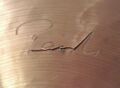
Early Traditional models had an embossed or stamped Paiste script logo. This was discontinued after the first or second year: cracking about the embossed logo has been sighted as a reason for this change.
Signature Traditional series emboss logo w/crack

Early 2002 stamp with border, aka: "box stamp"
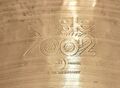
German 2002 stamp
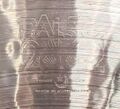
Swiss 2002 stamp
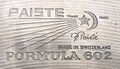
602 "solid stamp"
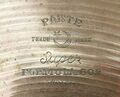
Super Formula 602

German 505 stamp
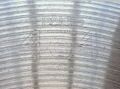
404 stamp
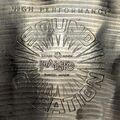
Sound Creation stamp

Rude 1st. generation (early '80's) ink stamp
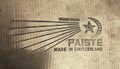
Vintage Giant Beat stamp
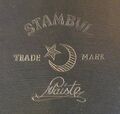
Stambul

Dixie

Zilko

Zilko standard

Standard

Super
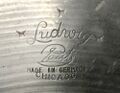
"3 star" Ludwig-Paiste

Ludwig "standard"

Ludwig-Stanople


1981 transition to Ink Stamps
Taking cues from the new 1980 Rude models with it's large printing of the logo, size and model name; Paiste applies the same labeling format to all it's current models the following year.
Paiste started to use ink stamps to identify their products mid 1981. These are used to identify the series, type and size of the cymbals.
At the same time Paiste also changed the serial number format adding "Paiste" and the series name above the serial number: detailed info here.
As with all of Paiste's production through the years; there was a transition period, it was common for Paiste to "restamp" black label cymbals with the new printed logo, the old emboss/stamp can be clearly seen under the printing (see examples below).
There is some confusion as to when a cymbal is made because it has a printed logo, the serial number and formatting of the serial number is the most accurate way to determine that.
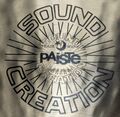
Sound Creation with stamp and printed logo

602 with stamp and printed logo

1975 Dark Ride with 602 printed logo in black ink
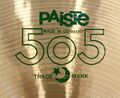
505 with stamp and printed logo
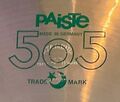
Stambul that was relabeled as a 505


Size Stamps
During the "black label" era, size stamps appeared under the bell. During the "printed or colored label era" (starting in 1981) they were moved to the front of the cymbal and placed below the "type" identifier at the 03:00 position.
Like the "type" label, they are usually in a sans serif font. When using the sans serif font, the number is in a bold typeface.
There has been subtle variation in the font over the years, such as the inch size being in either a bold or non-bold font: detailed info here
Spotting details include:
- RUDES uses a stencil font for the type label, but the standard sans serif font for the size.
- In the 1990s the size has become part of the type label for the Traditional and Signature series
- Like the type label, the size label of prototype have been found in the 03:00 position and 12:00 position.
Prototypes
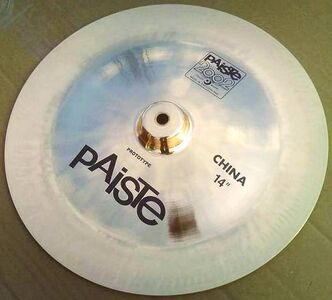
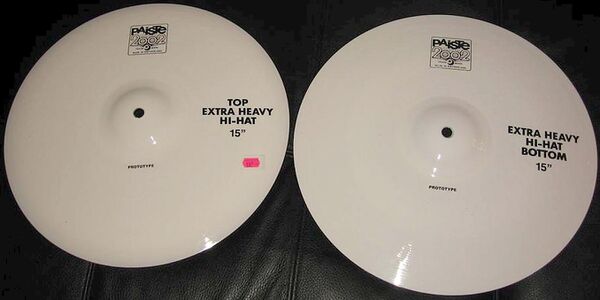
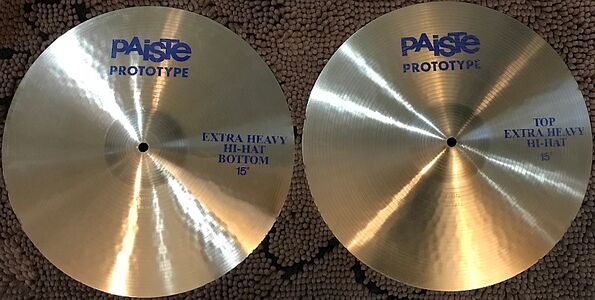
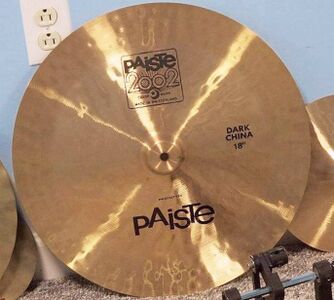
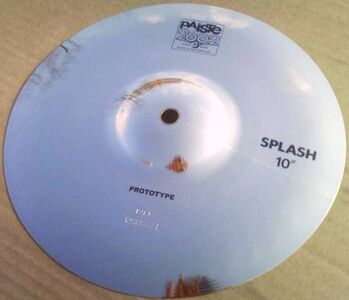
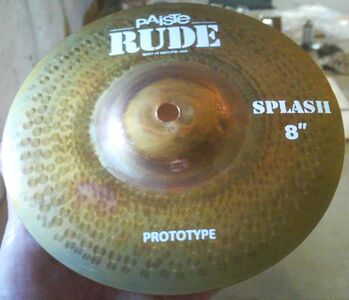
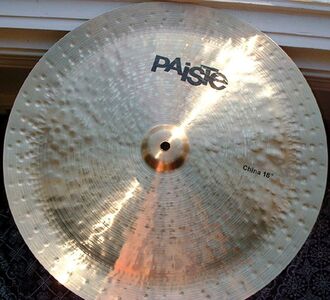
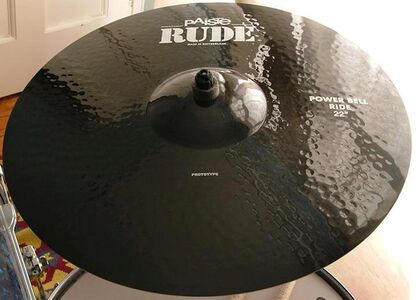
Prototypes tend to be a bit non standard in their labeling. It is common practice for the 12:00 position to contain the word "Paiste" in large print. In smaller print, at 6:00 the word "Prototype" normally appears in a smaller size. Examples exist the do not include the word "Prototype".
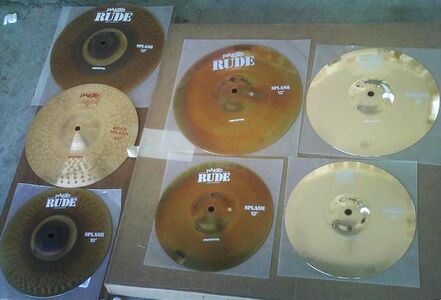
Spotting details include: Prototypes do not contain any production series identifiers, except for a small sticker often found on the back of the cymbal. It is unclear whether this is an indication of what series the cymbals was designed for or if it is only used as a guide for pricing the cymbal by retailers. Prototypes often use "generic" model designations, i.e., "Crash", "Ride", "Hi-Hat", et cetera.
Also, cymbals that were custom ordered often have, but not always, "PROTOTYPE" on them, even though they weren't prototypical. These cymbals will have the series name and model. Cymbal models & sizes no longer offered are usually the most seen custom orders. While Paiste doesn't approve of every custom order request, they will make them, but with an additional charge. (30%) Contact a Paiste dealer for more information on custom cymbals. (HINT: Search online "Paiste Custom" and find drum shops that have them in stock. They are good ones to contact, as Paiste has made custom cymbals for them in the past.) :)
- Paiste Prototypes



Artist Model Stamps
There have been a limited number of artists model stamps ranging from simple sans serif text to graphics.
Spotting details include:
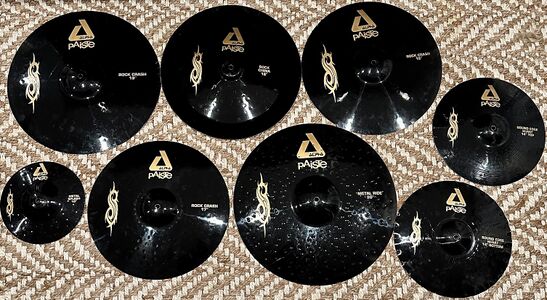
Alpha
- Black Alphas (initial release) use a unique gold tones ink and include the Slipknot logo in the 09:00 position.
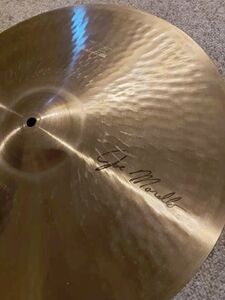
Formula 602
- Joe Morello Set cymbals included his name stamped in the 03:00 position with the type identification. Developed in cooperation with Joe Morello
RUDE
- RUDE 22" Power Ride "The Reign" features a white "The Reign" logo at the 3 O'clock position above the type/size logo. Developed in cooperation with Dave Lombardo
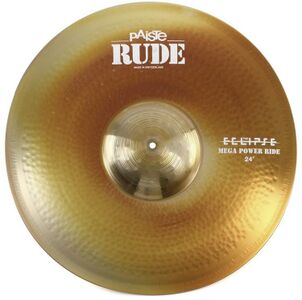
- RUDE 24" Mega Power Ride includes the "Eclipse" moniker in the 03:00 position just above the type label. Developed in cooperation with John Dolmayan
Signature
- Signature 12" Combo Crisp Hi-Hat features black "The Rhythmatist" logo in the 06:00 position under the cymbal type label. Developed in cooperation with Stewart Copeland
- Signature 20" Duo Ride features a black "Vir2osity" logo at the 6 O'clock position. Developed in cooperation with Carl Palmer
- Signature 22" Blue Bell Ride features white "The Rhythmatist" logo in the 06:00 position under the cymbal type label. Developed in cooperation with Stewart Copeland
- Signature 22" Dry Heavy Ride "Monad" in purple ColorSound features white "Monad" logos at 6 and 9 O'clock positions. Developed in cooperation with Danny Carey
Signature Reflector
- Signature Reflector 22" Bell Ride has "Powerslave" written in Iron Maiden font together with Eddie stencil in 06:00 position under the cymbal type label. Developed in cooperation with Nicko McBrain
2002
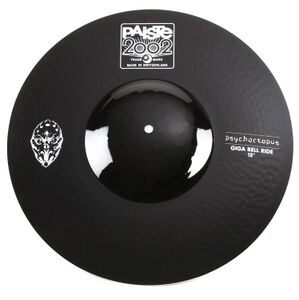
- 2002 18" Giga Bell Ride features white "psychotopus" logo above the cymbal type/size label. Developed in cooperation with Aquiles Priester
- 2002 24" Big Ride features red "Reverend Al's BIG RIDE" logo above the cymbal size label. Developed in cooperation with Alex Van Halen
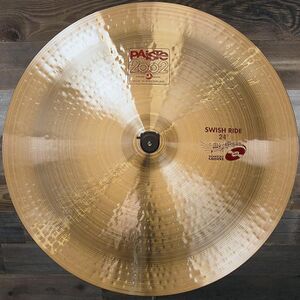
- 2002 24" Swish Ride features a red "Signature Groove" logo at the 3 O'clock position. Developed in cooperation with John "JR" Robinson
Masters
- Twenty Masters Collection 20" Sweet Ride / Masters 20" Mellow Ride features a blue "Blue Bird" logo at the 6 O'clock position below the type/size logo. Developed in cooperation with André "Dédé" Ceccarelli
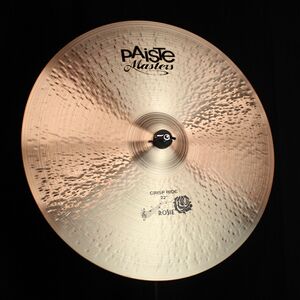
- Twenty Masters Collection 22" Crisp Ride features a black "Rosie" logo at the 6 O'clock position below the type/size logo. Developed in cooperation with Leon Ndugu Chancler
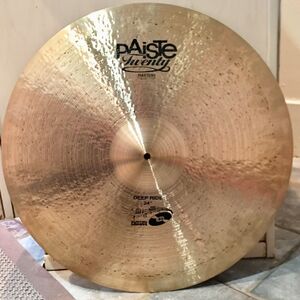
- Twenty Masters Collection 24" Deep Ride features a black "Signature Groove" logo at the 6 O'clock position. Developed in cooperation with John "JR" Robinson
- Artist Model Stamps
Black Alpha
Formula 602 "Joe Morello" Script

Formula 602 "Joe Morello" Stamp

RUDE 22" Power Ride "The Reign"
RUDE 24" Mega Power Ride
Signature 12" Combo Crisp Hi-Hat

Signature 20" Duo Ride

Signature Reflector 22" Bell Ride
Signature 22" Blue Bell Ride
Signature 22" Dry Heavy Ride "Monad"

Twenty Masters Collection 20" Sweet Ride
Masters 20" Mellow Ride
Twenty Masters Collection 22" Crisp Ride
Twenty Masters Collection 24" Deep Ride
2002 18" Giga Bell Ride

2002 24" Big Ride
2002 24" Swish Ride


Lathing
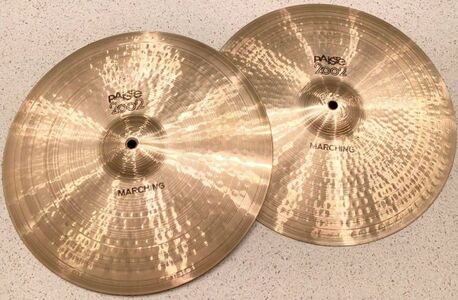
In the absence of embossed or stamped logos, cymbal identification can be performed by evaluating the lathing. Many series have very distinct lathing.
For example, RUDES are known for not being lathed at all (with the exception of the 24" Mega Power Ride, and Innovations have the "Sound Texture" lathing that looks as if the lathing tool was allowed to skip across the surface.
Spotting details include:
- Paiste Lathing Styles
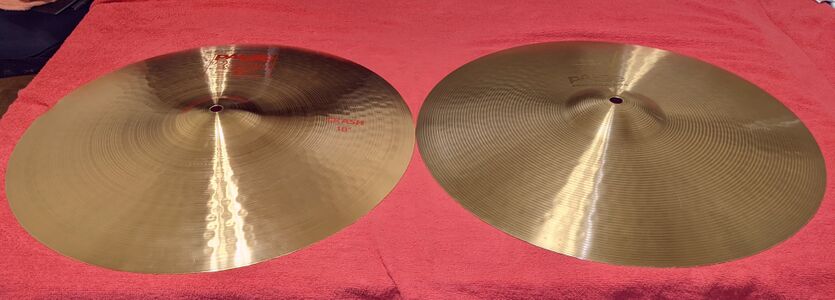
2002 and 602 side by side, lathing and color of alloy differences can be clearly seen.
2002's have two layers of lathing: fine lathing with uneven spaced coarse lathing over it

602 crashes, rides etc. seem to have very consistent even spaced deep lathing
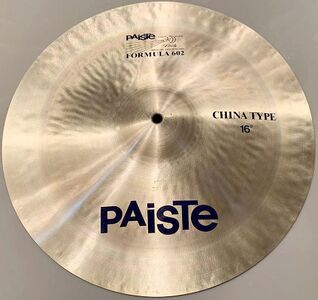
602 chinas, splashes, bells and flat rides have very fine lathing
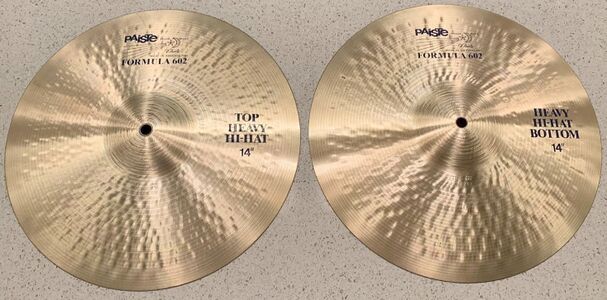
hi-hats vary depending on weight: heavies have coarse lathing
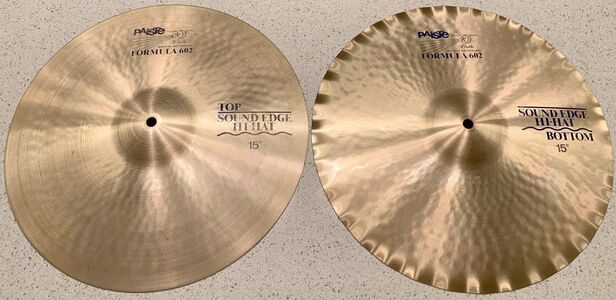
Medium and sound edge hi-hats have fine lathing
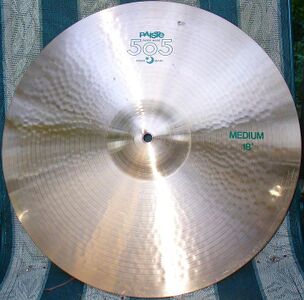
505's are similar to 2002's with dual lathing except the coarse lathing is simpler and evenly spaced
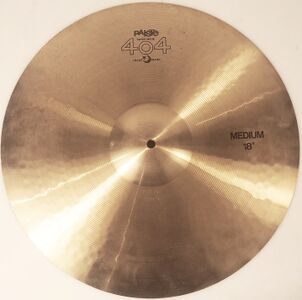
404's have very consistent tightly packed moderate lathing, not as deep as the lathing on 602's


1992: Revival of the black labels and Mr. Paolo Sburlati
(Paolo Sburlati worked many years for Paiste in Italy, he ended up distributing Paiste cymbals in Italy from 1984 to 1987, at that point, Toomas decided to switch to a larger distributor (Aramini) and moved Paolo over to a promoter/endorser for Paiste.)
Paolo Sburlati: "In 1992 Ian Paice gave me an old Ludwig drum set that he had used with Deep Purple and Whitesnake. Since it was from 1975, I wanted to match it with 2oo2 cymbals from the same era, the ones with the hand stamped black ink lettering.
I asked Toomas Paiste if it was possible to have a set of 2oo2’s stamped with the old ink stamps. Toomas immediately liked the idea of the 70’s Ludwig/Paiste pairing, unfortunately, the old ink stamps were on a stamp holder at the home of his brother Robert who was not entirely in agreement on this "revival" plan.
So, one evening after Toomas visited his brother (who lived next to the factory in Nottwil), he took the stamp holder with the stamps from his house to the office!
The next day he had the set of 2oo2’s that I had ordered for the occasion were hand stamped with the old labels. There were about forty cymbals in total made, they were to be used with other vintage Ludwig drum sets that I had in my collection."
Subsequently, to celebrate the 2oo2 line in the year “2002”, Toomas decided to once again stamp new 2002’s with the old ink stamping, these were special order versions with a cost increase of 30%.
We understand that with these versions made in the year 2002, Paiste used the current technique and machines to label the cymbals, this is evident by the very sharp and clean edges of the ink labels compared to ragged and inconsistent labels of the original hand stamps.
There may be others out there identifiable from the 1992 serial numbers.
Paolo is listed in the profiles III book
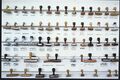
original hand stamps

20" ride made for Paolo Sburlati

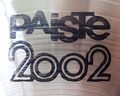

1992 serial number
note that "swiss made" was added to the bottom of the cymbal.

Year 2002 black label promo with "modern" black ink labels
2002 labeled with a "modern" stamp, note how clean the printing is compared to the original hand stamp


Factory refinishing
Details are scarce, but from a few 2007 online posts from a German drum forum, it seems Paiste offered a "refinishing service" where they would clean, recoat and then print new logos using modern methods (no rubber ink stamp!).
Results are outstanding considering the reasonable cost associated for the service (see correspondence below), both the the German factory and Swiss factory offered this service.
According to correspondence; if you want new logos printed, only the Swiss factory can do it. Also, we don't know if Paiste is still offering this service.
If you find a 70's black label cymbal based on the serial number but it looks brand new, this could be the reason why.
03/2007:
"Thank you for your email and your interest in Paiste products.
Please note that we are offering this service free of charge until further notice. Please send the cymbals directly to us in Switzerland.
Thank you for your understanding and your continued support!
Best regards, Paiste AG
Customer Service: Switzerland"
10/2007:
"Thank you very much for your email. The Paiste company calculates the refinishing as follows:
Cleaning and preservation 20, - Euro net / pc.
Cleaning, stamping and preservation 30, - Euro net / pc.
Shipping costs are calculated at 3.80 euros net.
In your case, I need to know what color the 2002 logo is and whether it needs to be renewed.
If this is the case, we will send the cymbals to Switzerland because we do not have the appropriate logos here in Germany, then you would have to accept a longer waiting time.
Please send the cymbals to the following address:Paiste GmbH & Co.KG, Gorch-Fock-Str. 13
D-24790 Schacht-Audorf"

15" Sound Edge top before
15" Sound Edge top after
Closeup

15" Sound Edge bottom before

15" Sound Edge bottom after
German 2002 from about 1976 based on serial number
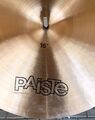
bottom logo shows the post 2005 "made in Switzerland"
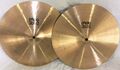
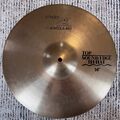
notice the black ink instead of standard 602 blue ink (stamped over the outline emboss/stamp)
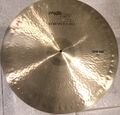
this was common for cymbals refinished in the 90's because Paiste was no longer using blue ink for any of it's labels


Early 70's 602 engraving dates
We know from two different sources at Paiste (one was Erik Paiste) that these may represent cymbals which were returned to have some rework done on them.
They most likely date the modification and not the actual cymbal manufacture date. Currently we have records for two dozen of these 602s:
- 1-72: 3 (one with R - 1 - 72 but in the same style)
- 2-72: 2
- 3-72: 5 (one pair of 15" SE hats with outline stamp and the older style patent list)
- 4-72: 6
- 5-72: none so far
- 6-72: 3
- 2-73: 3 (pair of 1972 serial number hats plus a preserial 20" Ride)**
- 3-73: 1 (14" SE hat bottom preserial) This preserial tells us that the time lag before a cymbal is returned for rework might be a year or two.
- And last but not least there is one Giant Beat which has 7 or 9 - 72
(**)The above pair of hi-hats is a rework from Paiste: The engraving is "2-73" and the serial numbers are 226602 and 226603, the hats were 12 3/4" diameter and this is what Paiste customer services had to say: “this hi-hat indeed is from 1972, In former times hi-hat pairs were matched and the serial number was embossed afterwards. The engraving inside the bell “2-73” means, that something was changed or repaired on customer’s request in February 1973 by our craftsmen. The 12 ¾” size is indeed remarkable. It is possible, that the customer damaged the edge, and our craftsmen trimmed the edge at the factory in February 1973 with the result being a smaller sized hi-hat.”
3-72 engraving date
6-72 engraving date
3-73 engraving date "KPAC"
(**)02-73 engraving date
(**)2-73 cut down to 12 3/4"


Variations of the patent stamp on Sound Edge Hi-Hats, Flat rides
Through the early years of sound edge hi hats, the number of patents by country increased for zero to six:
- "Pat. Pending" only from 1967 until at least July 1969 (after that the ink changes to show the US patent.)
- Patent numbers from 4 countries on stamp (Swiss, Great Britain, Italy, USA) ~1970 (possibly as early as July 1969 but no sooner due to the inclusion of US patent number)
- Patent numbers from 6 countries on stamp (adds Germany and USSR) ~1972 (It is possible it could date as far back as 4/1970 as that's when the German patent number was granted.)
- Removal of "other countries pending" by 1976 at the latest.
- There is the possibility that the earliest 602 SE Hats were stamped with a simple Sound Edge Top (and Bottom) in a plain font in red ink at 3:00 O'Clock (like all other 602s) before they came up with the black wavy SE Logo stamp.
- We have an old advert with this alternate stamping, we were told by Ed Clift that this plain text stamping was just done for the ad and that all production SE Hats had the wavy black logo, but it wouldn't be surprising if some were sold with the plain red ink.
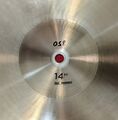
"Pat. Pending" only, '67 to pre July '69

Approx 1970 preserial 602 sound edge showing Patent numbers from 4 countries & "other countries pending"
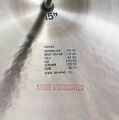
'73 602 Sound Edge showing Patent numbers from 6 countries & "other countries pending"
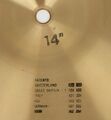
'79 602 Sound Edge showing Patent numbers from 6 countries and lack of "other countries pending"
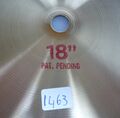
Early Flat Ride "pat pend" pre Dec. '70
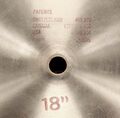
"Other countries pending" approx. post 1971
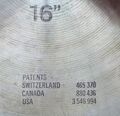
"Other countries pending" removed, last iteration stamp


Patent lists and Pat Pending years:
The timeline on the Paiste site says 1967/68 for Flat Rides and Sound Edge hats. The details on the U.S. patent & trade mark office site says:
- Paiste Flat Ride: United States Patent 3,546,994 Filed Jan 22, 1969 and Issue Date: December 15, 1970
- Paiste Sound Edge Hats: United States Patent 3,453,923 Filed Aug 3, 1967 and Issue Date: July 8, 1969
- Given Paiste themselves say "invented 1967/1968", they were likely patented in Switzerland and England earlier than in the USA.
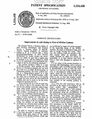
Oct. 1967 English patent application
English patent application

English patent application
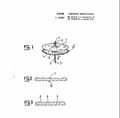
English patent application
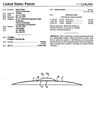
US Flat Ride patent 1970


Early high "ripple count" sound edge bottoms
Another identifying factor of early preserial 602 sound edge bottoms is they had a higher "ripple count" than later versions, it seems Paiste had not decided on a standard number when Sound Edges were first introduced.
- There are even numbers of ripples. They started out at 56 or 54 in the "Pat Pending" era (mid 1967 - mid 1969), reduced to 52 once production settled down, reduced to around 36-42 by 1972 (serial number black label era), and 32 by the blue label era and into the present day reissues (needs to be verified).
- There are cymbals with other ripple numbers (46 x 1, 38 x 1) which might represent the handmade factor, or be intermediate forms in time. We don't have enough examples to get that precise.
Sound Edge ripple reductions (scallops) tabulation as at 10-Oct-21
56 14" preserial x 3
54 15" pat pending; 15" black
52 14" preserial x 7
51 15" with 51 reputed (probably miscount by 1)
50 15" preserial; 14" preserial
46 14" preserial
42 14" black label; 14" preserial, 1972 13"
38 14" black label
36 14" black label x 3
32 14" blue label; 14" present day

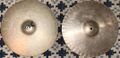

46 ripples
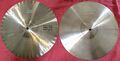
top and bottom
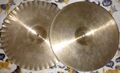


U.S. distributors before 1965
DynaStar Formula 602s were sold in the USA by Halifax Distribution from 1962 to early 1965 prior to Ludwig taking over exclusive North American distribution later in '65.
Prior to Ludwig's exclusive deal with Paiste in ~1965 it looks like Bonne Music Center in Syracuse, NY was one of "the" places to get a Formula 602 in the early 1960s (printed material exists to confirm a 1962 start date of Dynastar F602).
The cymbals even got an alternate emboss logo with the Dynastar name. Why the Dynastar name? That remains unclear. Around this time, the store also started importing a lot of other instruments from overseas, so maybe they tied them all together under the Dynastar brand name.
As an aside: Dynastar/Halifax also briefly sold the Paiste Dixie and budget SUPER for a short time in 1964/5 before those lines were removed from the market due to the Ludwig deal. Why didn't Halifax carry the Stambul? Because it was already being sold in the USA as the Ludwig Paiste (3-star logo).
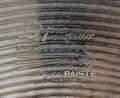
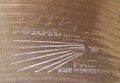
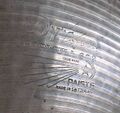
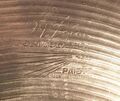
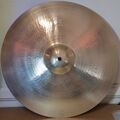
18" 602 Dynastar medium
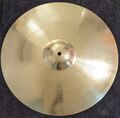
18" 602 Dynastar medium
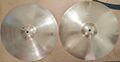
Dynastar (left), E over trade (right)
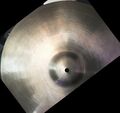


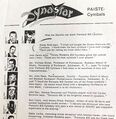
Bonne Music/Halifax Distributing of Syracuse, NY
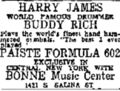
Bonne Music/Halifax Distributing of Syracuse, NY
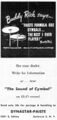
August 1963 Buddy Rich Down Beat magazine advert
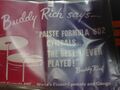
Color fyler of same Buddy Rich advert

December 1963 William Street Down Beat magazine advert
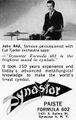
Jan 1963 John Rae Down Beat magazine advert
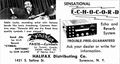
March 1963 Eddie Locke Down Beat magazine advert
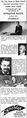
March 1963 Down Beat magazine advert
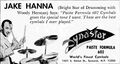
Sept 1964 Jake Hanna Down Beat magazine advert


_Dynastar_Paiste_Buddy_Rich_ad.JPG)

_Dynastar_Paiste_ad_William_Street.JPG)
_Dynastar_Paiste_ad_John_Rae.JPG)
_Dynastar_Paiste_ad_Eddie_Locke.JPG)
_Dynastar_Paiste_ad_four_drummers.JPG)
_Dynastar_Paiste_ad_Jake_Hanna.JPG)
European, English & Japanese distributors
Collectors may run across odd looking logos from vintage Paistes during their online searches, below is some background detail and history on what one might find:
England:
Arbiter
"Arbiter Ltd." and "Dallas–Arbiter" were the UK importers and distributors for Paiste. Ivor Arbiter wikipedia
Ivor Arbiter was a British-American drum designer, manufacturer, instrument salesman, and entrepreneur. In his early career, he was the owner and operator of a specialty drum shop in the West End of London.
Later, Arbiter founded or co-founded several instrument companies, including Arbiter–Western, Dallas–Arbiter and CBS–Arbiter. "Arbiter Ltd." was sold to Dallas in 1969 the company was renamed "Dallas–Arbiter".
There were 4 different Arbiter stamped Paiste lines starting in 1962 before they stopped and carried the standard Paiste branded lines in the late 60s: Arbiter Custom Formula 602 (602) Arbiter Custom (most likely Stambuls) Arbiter Zilko (most likely Dixies), Arbiter Zilket (most likely SUPER or an Arbiter only student line).
These were sold until as late as 1968. By 1969, Arbiter started carrying standard Paiste branded product lines except for the Zilkets which were sold until the early 1970s.
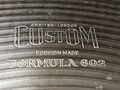
Arbiter Custom Formula 602 logo. This cymbal is probably from the mid 1960s. Charlie Watts used a 16" Arbiter Custom Formula 602 for many years before it cracked.
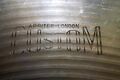
Arbiter Custom pricing and available sizes indicate the "Custom" might been a Stambul with a different emboss.
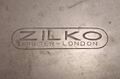
Arbiter Zilko
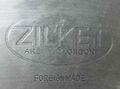
Arbiter Zilket
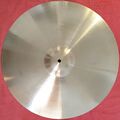
Arbiter "Custom" Formula 602
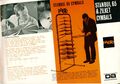
'71/'72 Dallas-Arbiter catalog
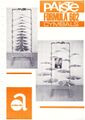
1968 Arbiter Ltd. catalog

1968 Arbiter Ltd. price list for 602's
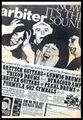
1964 Arbiter advert


1971/72 Arbiter catalog
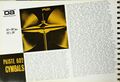


Hayman standard cymbals
Hayman was a UK-based drum brand that was produced from 1968 - 1975.
Hayman drums and cymbals were the brainchild of Ivor Arbiter: "The Hayman Standard is a cymbal with the Hayman name made by the Paiste Cymbal Company in Switzerland. These fine cymbals will more than meet the requirements of the drummer who is not yet ready to purchase a top of the line cymbal". (from early-mid 70s Dallas-Arbiter catalog). These B8 Paiste-made cymbals are a bit on the rare side.
Our guess is that Paiste made these cymbals for just a few years, most likely from 1972 to 1975 as Dallas-Arbiter carried standard Paiste product lines up until at least 1971/72. The Dallas-Arbiter catalog is unclear on how these cymbals were typed, listing them as hi hats and medium rides, which doesn't make much sense given the available sizes. One cymbal we found, from what's left of the ink that it was designated as a Medium Thin, that suggests these cymbals were relabeled Dixies with a Hayman emboss.
Also the lathing style also matches the Dixies from that era. Wikipedia: Hayman drums
There is alo the "Phase" and "Phase 1" series which could've been relabeled supers or Dixies, no weight designation that we have seen so far.
Available sizes:
Hi Hats: 14", 15"
Cymbals were available in: 16", 18", 20", 22"
It's quite possible they were available in these two weights:
Medium Thin: 16", 18", 20", 22"
Crash Ride: 16", 18", 20", 22"
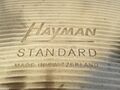
Hayman standard
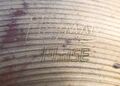
Hayman Phase
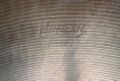
Hayman Phase 1
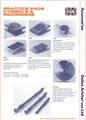
Hayman Arbiter catalog
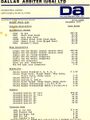
Dallas Arbiter catalog from Dec 1972
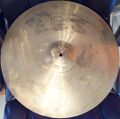
20"
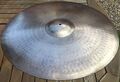
22"
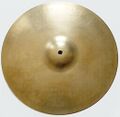
14" hi-hat
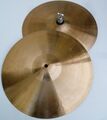
Pair 14" hi-hat
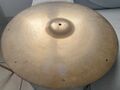
Phase 1 ride


Germany:
Sonor drum co.
Sonor sold Paiste Stambuls in their catalogs with a special Sonor logo stamped below the regular Stambul stamp. Paistes are listed in the Sonor catalogs from 1952 to about 1958. We cannot find any evidence that Sonor had a relationship with Paiste prewar, but investigations are ongoing!
1952 catalog

1952 catalog

1953 catalog

1957/8 catalog

1957/8 catalog

1957/8 catalog

early 50's stamp with old Sonor "delta" logo

early 50's stamp with old Sonor "delta" logo

Sonor "script" logo

Sonor "script" logo

Sonor "script" logo


.jpg)
Trixon drums
Trixon was another German drum company like Sonor, the cymbals listed are Stambuls with an alternate logo stamp.


Tromsa drums


Deri drums


Luxor
Luxor drums may have been made in Japan and perhaps sold in Germany...

France: Asaba

Italy: SISME
SISME were the Italian importers and distributors for Paiste from the early 1970's (there are preserial and "transition" cymbals from approx 1970/71 that have the SISME stamp on them) until about 1984 when "Paiste Italia" took over.
Paiste had been distributed in Italy in the ‘60s and early ‘70s by Hans Bauer as "Casale-Bauer distributing".
SISME started distributing probably around 1970, while Casale-Bauer was still distributing at the same time, in order for SISME to distinguish their cymbals from Casale-Bauer, Paiste added "Hi performance" (a favorite phrase of Roberts), in addition, Aldo, the owner of SISME also asked Toomas to add the red "Sisme distribution" ink stamp on the bottom of the cymbals. SISME's distribution ended in 1984 when Paolo Sburlati and "Paiste Italia" replaced them.
Sound creation logo with SISME "high performance"
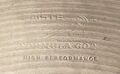
Preserial 602 thin with "high performance" stamp
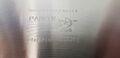
602 "high performance" stamp
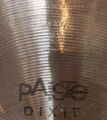
Dixie "high performance" stamp
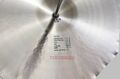
602 sound edge with "SISME distribution" stamped in red
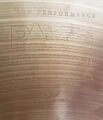
2002 "high performance" emboss
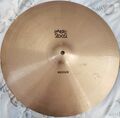
SISME 2002
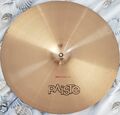
SISME 2002 bottom
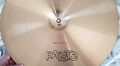
2002 "SISME distribution" stamped in red


Japan: Pearl
There was a time when Pearl distributed Paiste in Japan. From research that time period seems to run from 1969 to 1979.
Below is a page from a 1979 Pearl JDM catalog showing the selection of Sound Creation, Formula 602, 2002, and 404's.
Of note here is the selection of 404s: it contains actual 404s and restamped Dixies as indicated by some of the sizes (12") and the Medium Thin and Crash Ride options.
The Dixie cymbals have a different emboss that includes the Pearl logo (see below).
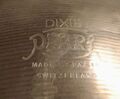
Dixie with Pearl logo included in stamp
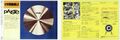
Paiste selection in 1974 Pearl JDM catalog. Shows Pearl was selling Giant Beats as well as 602s and Dixies
1975 JDM catalog
1975 JDM catalog - 2002s in - Giant Beats out.
1976 JDM catalog
1979 JDM catalog


Oddball distributors
602 "hifi bronce", bronce is Spanish for bronze, possibly a Spanish distributor?

Paiste Rarities, Oddballs, and Unique Items: A photo gallery.
Sources: Paiste.com, Cymbal alloys - wikipedia, Todd Little, Steve Black, Dan Garza, Nils Lillig.
Return to the Paiste Series Portal
Return to the Paiste Main Page
