Difference between revisions of "Paiste Ludwig"
| Line 104: | Line 104: | ||
File:1973 ludwig catalog 1.jpg|1973 Ludwig catalog | File:1973 ludwig catalog 1.jpg|1973 Ludwig catalog | ||
File:1975 ludwig catalog.jpg|1975 Ludwig catalog - Last appearance of Paistes in a Ludwig catalog | File:1975 ludwig catalog.jpg|1975 Ludwig catalog - Last appearance of Paistes in a Ludwig catalog | ||
| − | |||
File:13 ludwig standard HH.jpg|Ludwig standard 13" NS12 Hi Hats | File:13 ludwig standard HH.jpg|Ludwig standard 13" NS12 Hi Hats | ||
File:Ludwig standard 22 ride.jpg|NS12 Ludwig standard 22" Heavy | File:Ludwig standard 22 ride.jpg|NS12 Ludwig standard 22" Heavy | ||
File:Ludwig stan 16.jpg|NS12 Ludwig standard 16" Thin | File:Ludwig stan 16.jpg|NS12 Ludwig standard 16" Thin | ||
| − | File:Ludwig | + | File:Ludwig 16 thin 786g.jpg|B8 16" thin, 70's full ink labeling |
| − | File:Ludwig-standard-medium 14.jpg|Ludwig standard 14" Medium, 70's full ink labeling | + | File:PXL 20220323 235837585.jpg|B8 Ludwig standard 18" thin |
| + | File:Ludwig-standard-medium 14.jpg|B8 Ludwig standard 14" Medium, early 70's full ink labeling | ||
</gallery> | </gallery> | ||
Revision as of 13:25, 24 March 2022
Ludwig Paiste


Introduction: 1956*
Discontinued: 1964* (listed in Ludwig '64 catalog, replaced by the "Ludwig Standard") *Pending further review.
Background: There is proof that William F. Ludwig sent a letter to M. Paiste on July 23, 1946 agreeing to a partnership deal between the two companies.
However, we do not yet know what that deal was, what kind of cymbals were to be sold, and when these were to be provided.
Robert Paiste recalls that the Ludwig family sent "care packages" (food) to the Paiste family after W.W.II, this indicates that Bill Ludwig Sr. possibly had a relationship with Michail Paiste before the war.
Bill Ludwig Sr. took a trip to Nenderoth, Germany to visit his childhood home around 1955/56, afterwards he attended the Frankfurt music fair where met Michael M. Paiste, the relationship soon developed into orders for 20,000 cymbals per year! From the 1957 catalog, a less expensive PAISTE series is offered in addition to the higher-quality Zildjian, under the name "Ludwig".
Ludwig cymbals (from a Robert Paiste interview he stated that that the Ludwig "3-star" was a rebranded NS12 Stambul sold to Ludwig for North American distribution).
They are first made in Germany (with the addition of "CHICAGO" on the stamp), then later in Switzerland, all were made of Nickel Silver alloy NS12.
There is proof of several different embossed logo variations: the 3-star cymbals without a country of origin were German-made (the German factory was the original post WWII production facility), we do know that any of the Ludwig 3 stars with the location name of "Swiss Made" or "Swiss" were made from 1957 and later. We believe all versions were made from NS12 (Nickel-Silver Alloy).
One should compare the old Ludwig logos that are shown through their history, as this will help to show similar dating in these earlier days.
We have found several indicator features to help identify general date ranges:
Indicator #1: Font Form and Font Style: There are two general forms being used (a script line-form or a hollow block-form). In addition, most of the lettering is shown (detached or separate letters), but one has an (cursive style or attached letters). See the Logo pictures to the right for a visual reference.
Indicator #2: Star Tip Count & Locations: Although there is only one example of tip count variance found so far, we have noticed the locations and angles of the stars have slightly changed over these years. It's unknown if this really matters towards dating, but it may give a clue. Most Ludwig 3 Stars have a 5-tips (points or ends), but there is one variant that has 4-tips.
Indicator #3: Font Style: There are two styles being used (with flared letter tips/ends) and (non-flared letter tips). You can see the "flared" tip lettering in the "u", "d", "w" and "i" of the Ludwig name.
The following is a guesstimate approach to a general timeline of the 3 Star use:
LOGO (A): This is likely the second version used, as it is still in narrow script line-form, but changes to a 'cursive' lettering style and it includes three stars around the top and ends of the "Ludwig" name. Just under this, included the signature "Paiste" name. Most of these cymbals show two locations: "Germany" over "Chicago". At the time, Ludwig's (based in Chicago) distribution was for the American market.
- Note: This logo used 4 pointed stars, which is the only one found in these variants. It's possible, like the original Super F602's, they were changing logos until they locked into a final product release.
LOGO (B): We believe this might have been used at the Swiss factory and 1957 or after. It uses a script line-form that is wider than the original script used in "Ludwig". The lettering is detached and has no flared tips. The usual three stars are in place around the "Ludwig" name, which is over the "Paiste" signature. Under this is typically the production location name.
LOGO (C): This is likely the last version of logo stamps used. We believe Paiste transitioned the font types from a script line-form over to a 'hollow' letter-form. They also used detached lettering with 'flared' tips, three stars around the "Ludwig" name, signature "Paiste" under "Ludwig", and the location name varied.
- Note: Being that this occurred in 1957 or after, cymbals had one of the following designations for location located under the "Paiste" signature:
C1. "Germany" (with or without "Chicago" under it)
C2. "Swiss Made"--1957 to 1964
C3. No location listed at all
From 1957 and after, these sizes were believed to be offered: Thin, Medium, Heavy 10" through 22" Designated as Band, Ride or Hi Hat.
It should be noted that Ludwig ordered a mass of cymbals shipped to their Chicago warehouse and from there, they mix and matched destined pairs of cymbals.
Again, until we find the missing documents to help better identify some of these characteristics, we can only surmise.
Alloy: Nickel Silver
Quality: Entry level
Applications: Student, High school Band, marching and orchestra
Thin
Medium
Heavy

Paiste's 1st. appearance in a Ludwig catalog: 1957!

1960 Ludwig catalog

1964 Ludwig catalog
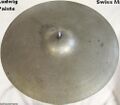
15" Ludwig Paiste
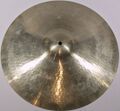
16" Ludwig Paiste
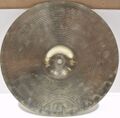
Bottom of 16" Ludwig Paiste
- Logo ludwig paiste.jpg
16" Ludwig Paiste logo
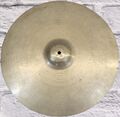
18" Ludwig Paiste


Ludwig Standard


Introduction: 1965*
Discontinued: 1975
Background: A joint venture by Ludwig and Paiste, the lower midline Ludwig Standards first appear in the 1967 Ludwig catalog, these cymbals were restamped Stambuls sold to Ludwig for North American distribution.
The cymbals were originally made of the NS12 alloy in both the German and Swiss factories before getting an upgrade to B8 sometime around 1971. Well-preserved Ludwig Standards will have a red ink type stamp at the 3 o'clock position and later period cymbals also have a black ink Paiste logo above the bell.
We have been told by those at or close to Paiste that they stopped making cymbals for Ludwig sometime around 1970, although Ludwig continued to carry Paiste products in their catalogs until the about 1975. The Ludwig Standards last appearance comes in the 1975 Ludwig catalog in limited size options as these cymbals are most assuredly leftover stock.
After looking at online posts on the Ludwig 3-Stars and reviewing the Ludwig catalogs of the time period again, it is quite possible or maybe even probable that the "Ludwig 3-Stars" are actually the first generation of Ludwig "Standards" made from ~1956-1964.
Ludwig didn't actually start using the name "Ludwig Standard" in its materials until 1965 and this could be when they started embossing the cymbals with this name.
It seems at this point they started to retroactively apply the name to cymbals that were previously called Ludwig Custom cymbals or Ludwig Imported cymbals.
Cymbals with the Ludwig Standard emboss will likely have been made between 1965 (or late 1964) until the end of production of this line.
Alloy: Nickel Silver NS12 - "B8" CuSn8 (most likely after 1971)
Quality: Entry level
Applications: Student, High school Band, marching and orchestra
Thin
Medium
Heavy

1967 Ludwig catalog
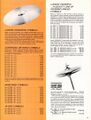
1971 Ludwig catalog

1973 Ludwig catalog

1975 Ludwig catalog - Last appearance of Paistes in a Ludwig catalog
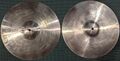
Ludwig standard 13" NS12 Hi Hats
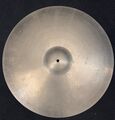
NS12 Ludwig standard 22" Heavy
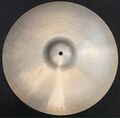
NS12 Ludwig standard 16" Thin
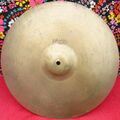
B8 16" thin, 70's full ink labeling

B8 Ludwig standard 18" thin
- Ludwig-standard-medium 14.jpg
B8 Ludwig standard 14" Medium, early 70's full ink labeling


Information from: Ludwig '67/'71 catalog, Todd Little, Dan Garza
Return to the Paiste Series Portal
Return to the Paiste Cymbal Type Portal
